
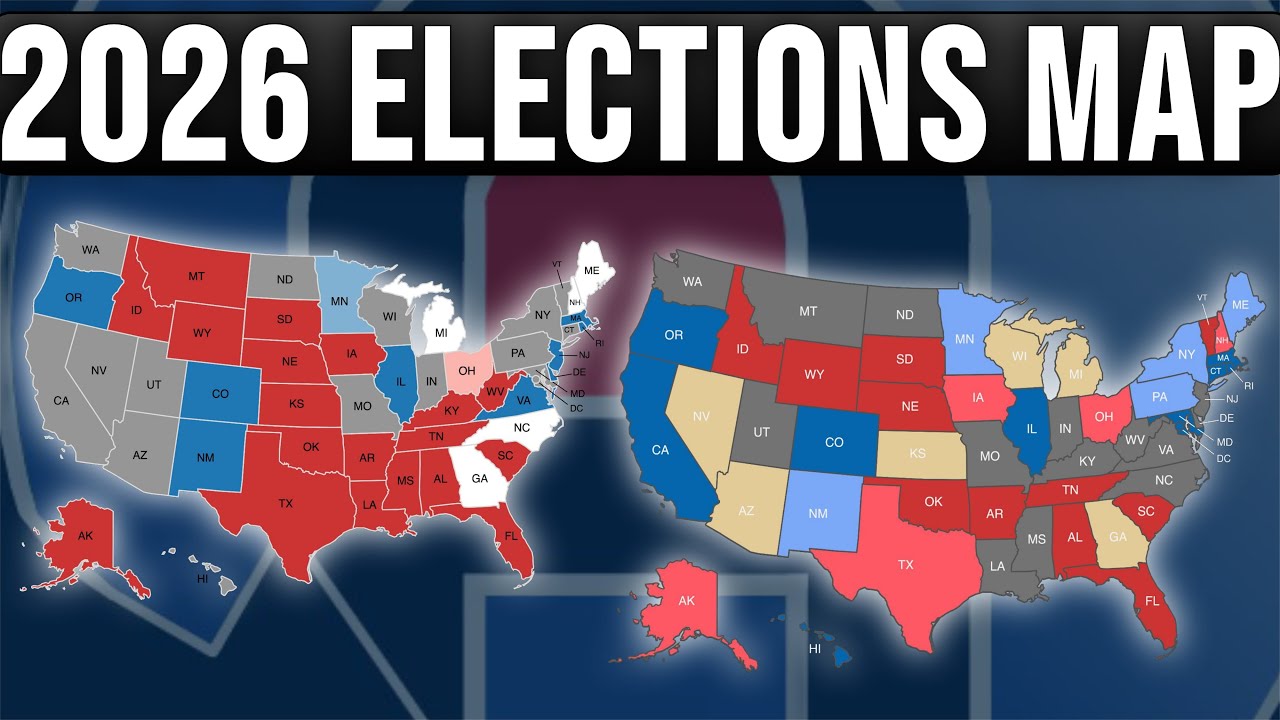
With just under three weeks to go until 3 November, the fight for the U.S. House of Representatives comes down to a limited number of districts. Republicans are defending a narrow majority, and Democrats need a net gain of four seats to take control. History favors the party out of power in a president’s midterm year, and forecasters currently lean toward Democrats. Redistricting battles in several states have complicated that picture, so the map matters as much as the national mood.
Only about 50 of the 435 seats were expected to be truly competitive when Reuters surveyed the field in September, though NPR’s analysis of campaign spending found more than 90 districts where the parties are committing resources in the closing weeks. As of 12 October, the nonpartisan Cook Political Report listed 21 races as toss-ups, 15 held by Republicans and six by Democrats, according to NewsNation’s summary. Decision Desk HQ gave Democrats a 76 percent chance of winning the chamber and Republicans 24 percent. Geoffrey Skelley, the firm’s chief elections analyst, noted that redistricting in states such as Florida and Texas could help the GOP hold on. Forecasts shift quickly, so treat any percentage as a snapshot.
The map itself has been reshaped. Republican-led Texas adopted new lines that Reuters said could help the party pick up as many as five seats, and Florida’s Republican redistricting could leave a delegation of 24 Republicans and four Democrats. Democrats have countered in California, where the Proposition 50 redistricting measure made some Republican-held seats more vulnerable. North Carolina Republicans also redrew their lines to make life harder for Democratic Representative Don Davis. The net effect is that both parties are fighting on terrain that looks different from 2024.
Start with the Republican-held seats Democrats hope to flip. In New York’s 17th District, Representative Mike Lawler is one of only three House Republicans who represent a district that Kamala Harris carried in 2024, which makes him the most vulnerable Republican on the ballot. Reuters reported that Democrats have outspent Republicans there by about $1 million, but Lawler holds a nearly five-to-one cash advantage over his challenger, Cait Conley, a decorated combat veteran and former National Security Council counterterrorism director running as a moderate. Decision Desk HQ gave Conley a 59 percent chance.
In Virginia’s 2nd District, Republican Jennifer Kiggans faces a rematch with former Democratic Representative Elaine Luria, both Navy veterans, in a military-heavy swing seat that has flipped parties four times since 2008. DDHQ rated Luria the favorite at 83 percent and said a Luria win would raise Democrats’ chances of taking the House to 77 percent, which makes the race an early bellwether on election night. In Pennsylvania’s 10th District, Republican Scott Perry, a longtime Trump ally and former Freedom Caucus chair, faces Democrat Janelle Stelson, a former television anchor, in a rematch of a 2024 race Perry won by about a point. DDHQ favored Stelson at 68 percent.
Arizona’s 1st District is an open seat because Republican David Schweikert is not running for reelection. It features Democrat Amish Shah, a physician, against Jay Feely, a former NFL kicker endorsed by Trump, and DDHQ favored Shah at 71 percent. In Michigan’s 10th, another open Republican seat in the Detroit suburbs, Democrat Christina Hines, a former prosecutor, faces Republican Michael Bouchard, an Army veteran. The district backed Trump in 2024 but supported Democratic Governor Gretchen Whitmer in 2022, and DDHQ gave Hines a 60 percent chance.
California’s 22nd District in the Central Valley became bluer under the new map, putting Republican David Valadao, a dairy farmer who voted to impeach Trump after the January 6 attack, in a tougher spot against political science professor Randy Villegas. In Ohio’s 7th, Trump carried the district by 11 points in 2024, yet Republican Representative Max Miller faces a close race against union ironworker Brian Poindexter after his ex-wife accused him of physical abuse. Miller denies the allegations and has not been criminally charged. DDHQ rated the race 52 to 48 in Miller’s favor, while prediction markets leaned strongly toward Poindexter, a gap that shows how uncertain the picture is. Elsewhere, Democrats see an opening in Maine’s 2nd, where former governor Paul LePage is running against state Auditor Matt Dunlap, and in Kentucky’s 6th, where Republican Andy Barr is leaving to run for the Senate.
Democrats have seats to defend too. In Florida’s 14th District, Representative Kathy Castor has held her Tampa-area seat since 2007, but the new map shifted it from a district Harris won by 8 points to one Trump would have won by 11, according to Ballotpedia. Republican Mike Beltran, a former state legislator, is trying to flip it, though DDHQ still favored Castor at 64 percent. In South Texas, Representatives Vicente Gonzalez and Henry Cuellar now run in districts Trump would have carried by 10 points. Gonzalez faces Eric Flores, a former federal prosecutor endorsed by Trump, and DDHQ favored the incumbent at 72 percent. In Washington’s 3rd, centrist Marie Gluesenkamp Perez is defending a seat Trump won narrowly in 2024 against state Senate Republican leader John Braun, and she holds a $4 million fundraising advantage, though Republicans have spent more than $1 million more than Democrats in the district, according to Reuters.
Several broader patterns stand out. Newsweek’s analysis found that forecasters made 113 House rating changes between January and mid-July, 92 of them favoring Democrats. Voters are reacting to higher prices and the war with Iran, and polling shared with NPR shows Trump’s job approval is lower than average in newly redrawn South Florida and Texas border communities. Even so, not every target will be won. NPR noted that from 2012 to 2024, Democrats converted 34 percent of their target districts and Republicans 29 percent, so many races rated as competitive will end up not changing hands.
For voters, the practical advice is simple. Check your district under the lines that apply this year, since many boundaries changed, and confirm your registration and early voting options with your state election office. For observers, the early results from East Coast races such as Virginia and Pennsylvania may offer clues before the western states report. Readers who follow how data and forecasting models shape election coverage can find related reporting at Innovation Times.

