
Table of Contents
In a wide-ranging television interview, the social media personality known as VDM explained why he is refusing to honor a Lagos police invitation, laid out a detailed account alleging that a senior officer was wrongly implicated in two killings, and addressed his public falling-out with Afrobeat musician Seun Kuti.
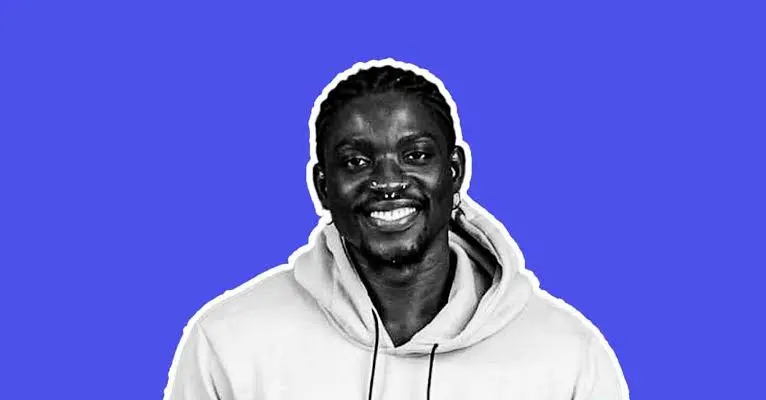
Martins Vincent Otse, the Nigerian social media personality known as VeryDarkMan, used a televised interview with Arise TV’s Rise 360 to explain his refusal to honor a Nigerian police summons in Lagos, which he described as malicious, and to lay out a detailed account alleging that a senior police officer was wrongly implicated in the killings of two men in an ongoing homicide investigation. He also addressed a public dispute with musician Seun Kuti and outlined his ambitions for the Rattel Movement, the online accountability campaign he leads.
Martins Vincent Otse, the Nigerian influencer better known by his online persona VeryDarkMan, told Arise TV that he will not honor a police invitation to appear in Lagos. He said the summons was retaliatory and tied to his public criticism of a senior police officer he believes compromised a murder investigation. The interview, broadcast on the network’s Rise 360 programme, arrived at a moment when Otse’s online following, built over roughly four years around consumer complaints, fraud call-outs and demands for institutional accountability, has grown into one of the most closely watched activist platforms in Nigerian social media. His allegations now routinely trigger public scrutiny of the individuals and institutions he names.
Throughout the conversation, Otse rejected the label of activist, saying he prefers to describe his work as that of an online police officer who holds both ordinary citizens and government officials to account. He used the appearance to press a specific and serious claim: that a senior police officer, identified only by the name Ahmed during the interview, may have been implicated in a murder case for reasons connected to a land dispute rather than credible evidence, and that a separate internal police investigation had in fact cleared the officer of any link to the killings.
Asked to describe who he is today, apart from his public profile, Otse said the biggest change over the past four years has been in how he handles conflict. He said he used to react impulsively but now takes time to understand an issue fully before commenting publicly, a shift he believes has earned him greater credibility with his audience.
Distancing himself from the language of activism
Otse spent considerable time in the interview explaining why he resists being described as an activist. He argued that in Nigeria, the term has come to imply that every social problem is the government’s fault, a framing he rejects. He offered the example of traffic laws that already exist but go unenforced because ordinary citizens choose to ignore them, arguing that many of the country’s problems begin with individual conduct rather than policy failure. Fraud, he said, is a case in point: when a person is scammed by a vendor who fails to deliver goods or services, that is not a government failure but a breach of individual responsibility.
For that reason, he said, he prefers the term online police to activist. He said his interventions had helped recover what he estimated at billions of naira on behalf of people who had been defrauded, and that his platform carries enough credibility that public figures take his call-outs seriously.
Asked what accountability means to him personally, he said it is simply the obligation to account for whatever responsibility one has been given, whether that involves a government contract, a public office or a private business transaction. If someone is tasked with building a school, he said, they should build the school, and if they cannot account for the resources involved, they should be held to answer for it.
Asked whether a single moment had pushed him toward this kind of public accountability work, Otse pointed to what he described as chronic state failures on security, saying ordinary Nigerians can no longer safely farm or travel and are forced to rely on air travel because roads remain poorly maintained. He said frustration with these conditions, shared broadly among people his age, was what drove him and others like him to act rather than simply talk.
The Rattel Movement and its methods
Discussing the accountability campaign he leads, known as the Rattel Movement, Otse acknowledged that his methods have drawn criticism. He said the campaign takes its name from the honey badger, an animal that does not defer to bigger or more powerful adversaries. He argued that more conventional, deferential approaches to holding institutions accountable in Nigeria have failed over the years, and that his movement’s more confrontational style, while unconventional, does not cross into illegality. “They don’t know that you are breaking their emotions and not the law,” he said, adding that his focus remains on making the country function rather than on how his approach is perceived emotionally by those he targets.
Pressed on a widely publicized physical altercation aboard a flight with entertainer Charles Okocha, popularly known as Mr. Jollof, Otse said he had been struck twice before responding and maintained that he was defending himself. He said, however, that he was not proud of how the incident unfolded, that he would not repeat that kind of response, and that he would never encourage anyone to take the law into their own hands in a way that endangers others, including fellow passengers. He apologized publicly to Nigerians for the episode.
Asked whether his large following sometimes reaches conclusions about people before due process has run its course, potentially outside his control, Otse said he takes time to verify claims before publishing them, and that in his account, no one has ever produced credible evidence that he lied about a case. He acknowledged that his audience sometimes moves faster than he does in drawing conclusions, but said he reviews feedback from his followers, including older members of his audience who message him privately, and adjusts his approach when he believes it is warranted.
A public falling-out with Seun Kuti
A substantial portion of the interview addressed Otse’s dispute with Afrobeat musician Seun Kuti, son of the late Fela Kuti, the Nigerian musician and political figure widely regarded as a founding voice of Afrobeat and of Nigerian protest culture. Kuti had publicly accused Otse of monetizing his platform, alleging that he softens his criticism of individuals once compensated, and had suggested that Otse’s public relevance exists only because Nigeria’s judiciary has failed to do its job. Kuti was also reported to have described Otse as unemployed.
Otse firmly denied ever accepting payment in exchange for silence or favorable coverage, arguing that given the number of adversaries his work has generated over the years, someone would have produced evidence of such a payment by now if it existed. He rejected Kuti’s suggestion that he lacks employment, describing himself instead as a businessman. He said he had once been invited to join a political movement associated with Kuti but declined because of disagreements over political strategy and ideology, adding that he believed part of Kuti’s frustration stemmed from that refusal. Despite the dispute, Otse said he retained personal respect for Kuti. Asked whether the two might eventually reconcile, he said a cordial greeting in public was plausible, but that renewed collaboration was unlikely given the substance of what Kuti had said about him publicly.
On politics and his own ambitions
Asked whether he intends to enter politics, Otse said he personally does not, though he believes political engagement is necessary for meaningful national change. He said members of the Rattel Movement intend to pursue local government positions rather than national office, arguing that grassroots accountability, closer to citizens’ daily lives, offers the most realistic path to improving service delivery and security. He said he would be willing to advise the president informally if invited to do so, characterizing his public criticism of government policy as a form of advice rather than opposition, and reiterated that strengthening local government funding and oversight would, in his view, do more for the country’s security and development than any other single reform.
Refusing the Lagos police summons
The most substantive portion of the interview concerned Otse’s decision not to honor a police invitation to appear in Lagos. He argued the summons was procedurally unusual, since he resides in Abuja, where the relevant federal police unit is headquartered, and said he suspected the invitation was intended to pressure or entrap him, potentially including efforts to access data on his phone. He said that if the police wished to question him, they were free to do so in Abuja rather than requiring him to travel to Lagos.
Otse then laid out a detailed account of the murder case he believes is driving the summons. He said two men were killed in separate incidents, the first identified as Sheriff Salami in April 2023 near Marina Road on Lagos Island, and the second identified as Prince Adamo in 2024. According to Otse, two suspects were arrested by police in January 2026, the first on January 6 and the second on January 24, and gave a recorded statement in which they confessed to killing Salami, citing a rivalry between two confraternities, or student cult groups, to which they and Salami separately belonged.
He said that roughly a month later, a second recorded interview with the same suspects produced a different account, in which they appeared to implicate a senior police officer, referred to during the interrogation as Ahmed, as having ordered the killings through an intermediary they identified only as Bod, whom they said was in Germany. Otse questioned whether police had ever established a verified link between this intermediary and the officer in question, or whether the accusation rested solely on the suspects’ unverified statement.
He said that after the officer was arrested, a formal complaint was made alleging that the original investigating team had compromised the case, prompting Nigeria’s Inspector General of Police to order a fresh investigation by a separate police unit. According to Otse, that internal review, which he said was dated May 23, found no evidence linking the officer to the suspects and could not identify the intermediary the suspects had named, effectively clearing him. Despite this, Otse said, authorities continued to hold the officer.
Turning to the second killing, that of Prince Adamo, Otse said the suspects had consistently denied any knowledge of him, a denial he said was reflected in the same internal police report. He offered a detailed account of the circumstances of Adamo’s death, saying he was killed after leaving his farm in response to repeated phone calls from a relative, and was struck by a vehicle before being shot and fatally attacked. Otse said the victim’s brother, who had made the calls, later blocked a police autopsy on religious grounds and, roughly ten days afterward, retrieved the victim’s phone from custody before a forensic examination could be completed. Otse argued this decision prevented investigators from establishing who may have been threatening or targeting Adamo prior to his death, and said the case was ultimately pinned on the accused officer without an adequate investigation.
He further alleged that the officer at the center of the case had been engaged in a land dispute involving another senior police official, and suggested this dispute, rather than the murder evidence itself, may have provided the underlying motive for implicating him. He also alleged that one of the original suspects died in police custody during the investigation, a detail he said was referenced in a written statement he had reviewed, and that questioning of a suspect had at one point been conducted by a civilian associate of a senior officer rather than by police personnel directly.
Otse said he had written to Nigeria’s National Assembly regarding the case and was awaiting a decision by the Inspector General of Police to establish a formal review panel. Asked why he had not pursued the matter through the courts, he said the courts were currently in recess, and that in the meantime he intended to keep the case in the public record so that it could be revisited and cited when similar cases arise in the future.
It should be noted that these are claims made by Otse during the interview, based on documents and statements he said he had reviewed. They have not been independently verified by InnovationTimes.org, and no response from the accused officer, the Nigerian Police Force or the AIG referenced in the interview was included in the broadcast.
Business ventures and personal life
Toward the close of the interview, Otse discussed matters outside his public campaigns. He said he was in the process of importing products from China intended to support small tradespeople and craftsmen, describing the venture as still in its early stages. He credited the public trust he has built with helping him secure favorable terms in those business dealings without requiring large upfront investment.
Asked how he unwinds away from his public advocacy, he said he neither drinks nor smokes, and described his personal time in general terms without elaborating further. He also confirmed his involvement in humanitarian projects, including school construction in Potiskum and renovation work at universities in Jos and Nasarawa, funded partly through donations from musician Burna Boy, which he said totaled several hundred million naira, alongside resources from his own nongovernmental organization.
Key Revelations
Otse is refusing to honor a Lagos police invitation, describing it as retaliatory and procedurally irregular given that he resides in Abuja. He alleges that a senior police officer was implicated in a double murder investigation despite an internal review that, according to his account, found no evidence linking the officer to the case. He alleges that the investigation into one of the killings was undermined after a relative of the victim blocked an autopsy and retrieved the victim’s phone before forensic analysis could take place. He alleges that a suspect died in police custody during the course of the investigation. He denied allegations made publicly by musician Seun Kuti that his platform accepts payment in exchange for favorable coverage. He said he does not personally intend to enter politics, though he supports allies within his movement pursuing local government office. He publicly apologized for a 2023 physical altercation with entertainer Charles Okocha, known as Mr. Jollof.
Timeline
April 2023: Sheriff Salami is killed near Marina Road on Lagos Island, according to Otse’s account.
2024: A second man, identified by Otse as Prince Adamo, is killed in what he describes as a staged vehicle collision followed by a fatal shooting.
January 6, 2026: The first of two murder suspects is arrested.
January 24, 2026: A second suspect is arrested.
Late January 2026: A recorded statement attributed to the suspects allegedly shifts from an earlier account, naming a senior police officer as having ordered the killings through an intermediary.
May 23, 2026: An internal police report is dated, which Otse says found no evidence connecting the accused officer to the killings.
2026, undated: Otse receives and declines a police invitation to appear in Lagos, which forms the basis of his remarks in the interview.
The interview reflects several recurring tensions in Nigerian public life. Chief among them is the growing role of independent social media figures in filling what many citizens perceive as a gap in institutional accountability, at a time when public confidence in police investigative processes remains a persistent national concern. Otse’s platform is illustrative of a broader pattern across parts of West Africa, in which individual influencers, rather than traditional civil society organizations, have become primary vehicles for publicizing allegations of fraud, misconduct and institutional failure. That shift raises its own set of questions about verification standards, due process and the risks involved when public figures weigh in on active criminal investigations outside formal legal channels.
Otse’s dispute with Seun Kuti also speaks to a broader generational debate within Nigerian civic culture over the legitimacy and tactics of newer forms of online accountability activism, set against more established political and artistic traditions of protest with which the Kuti family has long been associated.
The murder case allegations Otse raised are serious, and if substantiated would raise significant questions about the integrity of the underlying investigation. At this stage, however, they remain claims made in a media interview rather than findings established through a judicial process. Neither Nigeria’s National Assembly nor the Inspector General of Police had publicly responded to the specific allegations Otse raised at the time of the broadcast.
The interview positions VeryDarkMan as both a significant figure in Nigeria’s evolving accountability landscape and a subject of continuing controversy over his methods and motivations. His refusal to honor the Lagos police invitation, paired with detailed allegations concerning a compromised murder investigation, is likely to keep both his platform and the underlying case under sustained public and institutional scrutiny in the period ahead.
This report is based on an interview conducted by Arise TV. Claims made by the interview subject regarding an active criminal investigation are presented as reported allegations and have not been independently verified.