
Table of Contents
Understanding How Nigerians Use Their iPhones in 2026
A clear behavioral pattern is emerging from Google’s iPhone search data in Nigeria. The findings suggest that owning an iPhone in Nigeria involves more than using Apple’s latest features. Many users search for practical solutions that help them protect, maintain, and troubleshoot their devices in a market where resale value remains important.
What Nigerians Search for Most
How do Nigerians really use their iPhones? What problems send them to Google every day?
The answers appear in millions of search queries. They reveal the questions, frustrations, and concerns that matter most to iPhone users in 2026.
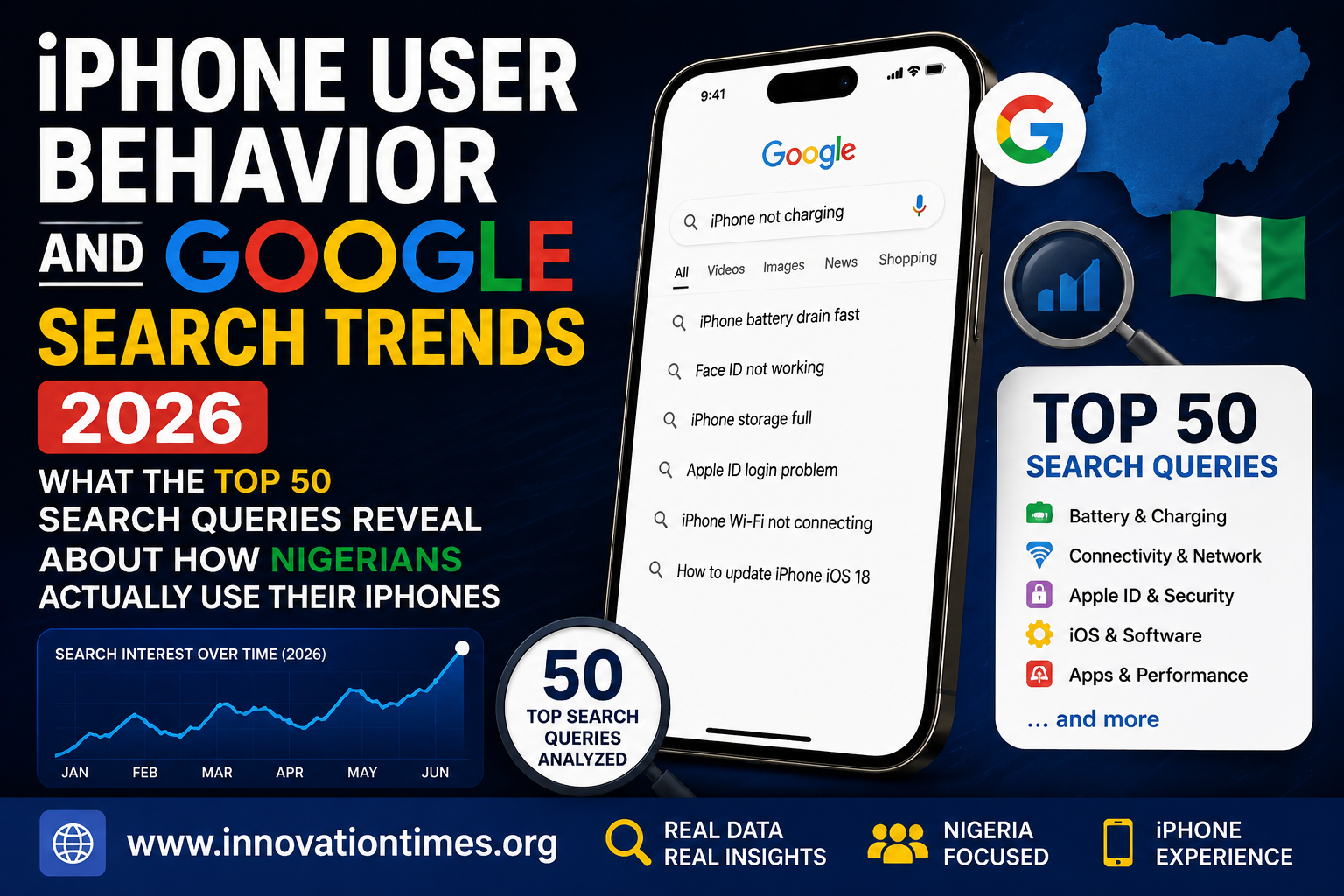
The most common searches include battery drain after iOS updates, Face ID not working, storage full warnings, Apple ID login problems, charging failures, and Wi-Fi connection issues. Together, these searches provide valuable insight into the daily experiences of iPhone users across Nigeria.
Search Trends Reveal User Behavior
The report examines the Top 50 most searched iPhone-related queries in Nigeria. It explains what people are searching for, why these issues continue to trend, and what they reveal about smartphone usage in one of Africa’s fastest-growing digital markets.
The findings also highlight changing technology habits, growing security concerns, and increasing demand for practical troubleshooting guides. These insights are valuable for iPhone users, technology journalists, app developers, digital marketers, and consumer technology researchers.
A Snapshot of Nigeria’s iPhone Market
HowToShareTips.com, a Nigerian technology support publication, compiled the research by analyzing the 50 iPhone problems Nigerians search for most often on Google. The research groups these searches into nine major categories.
Link to: Top 50 Most Common iPhone Problems Nigerians Search on Google in 2026
Rather than serving only as a troubleshooting guide, the report offers a snapshot of user behavior. It shows how the concerns of iPhone owners in Lagos, Abuja, and Port Harcourt often differ from those of users in cities such as London and New York.
Battery and charging issues rank as the largest category in the report. However, network connectivity, SIM-related problems, iCloud account access, and used-device verification also account for a significant share of searches.
Together, these findings suggest that many Nigerians focus on maintaining device reliability, protecting their Apple accounts, and ensuring their iPhones remain functional throughout their lifespan. The report concludes that Google search behavior provides a valuable window into how Nigerians use, maintain, and troubleshoot their iPhones in 2026.
“In markets where most people buy their iPhone new and sealed, you don’t see anywhere near this volume of searches about account locks or SIM compatibility,” a HowToShareTips.com spokesperson said. “That tells you the search behavior itself is a product of how the device was acquired, not just how it’s used.”
The report points to a specific and fast-growing search theme: confusion among users who’ve bought an iPhone only to discover it has no physical SIM tray at all. This affects buyers of US-spec iPhone 14 and later models, which rely solely on eSIM activation, a configuration increasingly common in secondhand units entering Nigeria through resale channels. According to the report, this exact theme has grown faster year-over-year than any other search category it tracked between 2024 and 2026.
Search behavior around Apple ID and App Store access also stood out. The report notes recurring queries about Nigerian debit and credit cards being rejected during Apple ID setup, Apple Pay’s unavailability for Nigerian-issued cards, and confusion when an Apple ID remains region-locked to a previous owner’s country, each reflecting friction points that simply don’t register as “common problems” in markets with mature local payment integration.
“These aren’t bugs in the traditional sense,” the spokesperson explained. “They’re market-availability gaps that show up in search data because there’s no other obvious place for users to get an answer.”
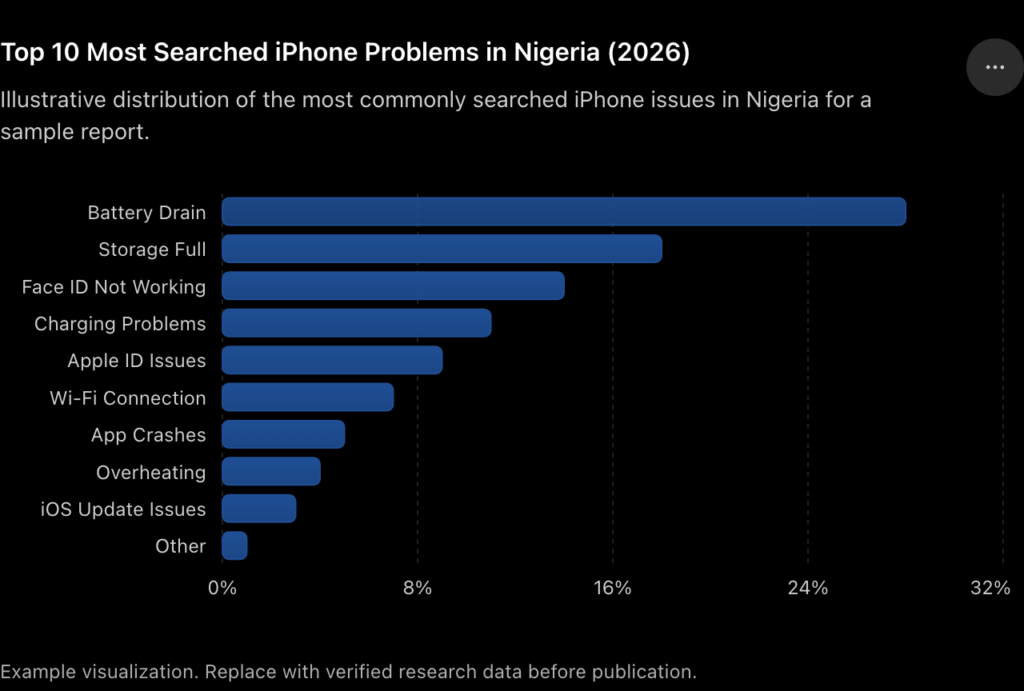
Why does this matter beyond Nigeria? Analysts who study search behavior as a proxy for consumer friction argue that this kind of localized data offers a more honest picture of a product’s real-world experience than official specs or marketing ever will. An iPhone’s feature set is identical whether it’s sold in London or Lagos, but the report suggests the lived experience of owning one is shaped almost entirely by local infrastructure, payment systems, and the provenance of the device itself.
The full breakdown, including which searches spiked, which held steady, and which are projected to keep climbing, is available in the 2026 iPhone Search Trends Report from HowToShareTips.com. The publication describes its percentages as editorial, directional estimates drawn from repair-shop reporting, forum activity, and troubleshooting trends rather than raw platform analytics, a caveat the authors say is important for anyone using the findings as a benchmark.
READ ALSO: Apple Targets Innovation Growth With $100B U.S. Expansion
For consumers, the value of this kind of search-behavior research is practical rather than academic: it flags, in advance, the exact questions worth asking before, not after, a purchase, potentially saving buyers from the same problems thousands of other searchers have already hit.