
Table of Contents
VeryDarkMan: The Rise of Nigeria’s Self-Styled Online Police
From viral call-out videos to repeated arrests and a running battle with the Nigerian Police Force, the story of Martins Vincent Otse traces the emergence of a new kind of Nigerian public figure, one built entirely on social media confrontation and consumer advocacy.
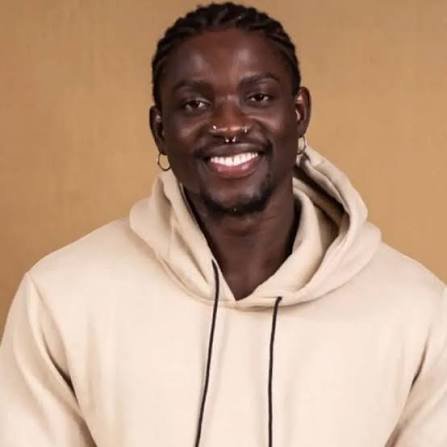
Martins Vincent Otse built one of Nigeria’s most recognizable and polarizing online personas out of viral call-out videos, consumer advocacy campaigns and a self-declared role as an “online police.” His path from relative obscurity to national prominence has run in parallel with a string of arrests, defamation disputes and, most recently, a standoff with the Nigerian Police Force over allegations he has made against a senior officer.
Early Life
Martins Vincent Otse, who would later adopt the online persona VeryDarkMan, was born on April 8, 1994. He is a Nigerian social media influencer and activist who describes himself as the “online police.” Public accounts of his early life vary somewhat in detail, and some are difficult to independently verify, but they broadly agree that he grew up in modest circumstances. Several profiles describe him as ethnically from Edo State, with accounts differing on whether he was raised there or in Kaduna State, where multiple biographical sketches place his upbringing. He is reported to have completed his primary and secondary education before proceeding to the University of Lagos, where he studied Business Administration.
Otse has occasionally referenced a difficult early life in his own commentary, including periods of financial hardship before he became a public figure. He has said publicly that he does not consider his past something to hide, framing his openness about it as part of the appeal of his public persona to a large segment of young Nigerians who see their own struggles reflected in his story.
Rise to Social Media Prominence
VeryDarkMan’s social media career began in 2022, when he initially gained public attention through videos targeting Nigerian celebrities, public figures and online personalities, generating significant engagement through allegations, personal disputes and controversial commentary. By early 2023, several of his videos had gone viral, further increasing his visibility and influence within Nigeria’s digital media space.
His breakout moment as a consumer rights figure came through campaigns against companies and individuals he accused of fraud, including unregistered skincare products sold without proper regulatory approval from Nigeria’s food and drug regulator, NAFDAC. That campaign, along with his willingness to publicly confront well-known Nigerian celebrities, helped cement his reputation as a figure willing to say what many ordinary social media users would not.
His profile rose further in 2023 when Nigerian singer Davido began following and publicly endorsing him on social media, lending him a degree of mainstream visibility beyond his existing online following. By January 2024, he had been nominated for Silverbird’s Most Influential Social Media Influencer of the Year award, a sign of how far his reach had extended into Nigeria’s broader entertainment and media landscape.
He also drew attention in September 2023 for publicly calling for a DNA test involving the son of the late Nigerian singer Mohbad, a case that had already generated intense public interest and speculation, further raising his profile as a commentator willing to insert himself into sensitive and high-profile controversies.
The “Online Police” Persona and the Rattel Movement
Otse has consistently resisted being described as a conventional activist, arguing that the term in Nigeria has become associated with the assumption that every social problem is a government failure. He instead describes his work as that of an “online police officer,” focused on holding both private individuals and public institutions accountable, whether the issue involves fraudulent business practices, unfulfilled obligations or government neglect.
That philosophy underpins the Rattel Movement, the accountability campaign he has built around his platform. The name draws on the honey badger, an animal associated with fearlessness regardless of the size of an opponent, reflecting the confrontational, unapologetic style that has become his trademark. Through the movement, Otse has said he has helped recover funds for people who were defrauded, and has directed resources toward humanitarian projects, including school construction and university renovation work, funded partly through his own organization and partly through donations from public figures, including musician Burna Boy.
Legal Troubles and Repeated Arrests
Otse’s rise has run alongside a lengthy and well-documented history of arrests and legal disputes, most of them connected to Nigeria’s Cybercrimes Act, which criminalizes cyberstalking and related offenses.
He was first arrested and detained on March 22, 2024, over allegations of cyberbullying and cyberstalking, and was later arraigned before the Federal High Court in Abuja on a five-count charge involving Nollywood actresses Iyabo Ojo and Tonto Dikeh, as well as the Nigeria Police Force itself. The charges centered on videos in which he made explicit allegations against Ojo and separately accused the cross-dressing socialite Bobrisky of facilitating relationships between young men and senior police officers and politicians. He spent more than two weeks in detention before regaining his freedom in early June 2024.
His disputes with public figures continued through 2024. By April 2025, a court had ordered his arrest over allegedly defamatory remarks made against gospel singer Mercy Chinwo, directing him to delete the content and issue a public apology. He also drew legal threats from prominent lawyer Femi Falana, whose chambers issued a 24-hour ultimatum in September 2024 demanding a retraction over allegedly defamatory claims made in an Instagram post.
The most widely covered episode came in May 2025. Otse was arrested by operatives of Nigeria’s Economic and Financial Crimes Commission shortly after visiting a Guaranty Trust Bank branch in Abuja, where he had gone to complain about allegedly unauthorized withdrawals from his mother’s account. The EFCC said the arrest followed multiple petitions accusing him of using his social media platforms to harass, insult and intimidate individuals, in possible violation of the Cybercrimes Act, and stated its intention to arraign him once bail conditions were met. Footage later released by the bank showed him leaving its premises freely, complicating some initial public accounts of exactly where the arrest took place. The detention drew public protests outside the bank’s Abuja headquarters and statements of concern from public figures, including former presidential candidate Peter Obi, who warned that such episodes risked undermining investor and public confidence in Nigerian institutions. He was released after five days in EFCC custody, a development announced publicly by activist Omoyele Sowore.
Feuds With Celebrities and Public Figures
Otse’s confrontational style has produced a long list of public disputes with entertainers, socialites and fellow online personalities. His running conflict with Bobrisky, which began in April 2023 over what he characterized as a culture of materialism and deceit, escalated into one of his most closely watched feuds and later fed directly into the criminal charges brought against him in 2024.
In 2025 and into 2026, a new and closely watched dispute emerged with Afrobeat musician Seun Kuti, son of the late Fela Kuti. Kuti publicly accused Otse of accepting payment in exchange for softening his criticism of individuals, a claim Otse has firmly denied, saying that given the number of adversaries generated by his work over the years, evidence of such a payment would already have surfaced if it existed. He has said the dispute stems partly from his refusal to join a political movement associated with Kuti.
He was also involved in a 2023 physical altercation aboard a commercial flight with entertainer Charles Okocha, known as Mr. Jollof, an episode he later said he was not proud of and for which he issued a public apology, saying he would not repeat that kind of response.
Current Standoff With the Nigerian Police Force
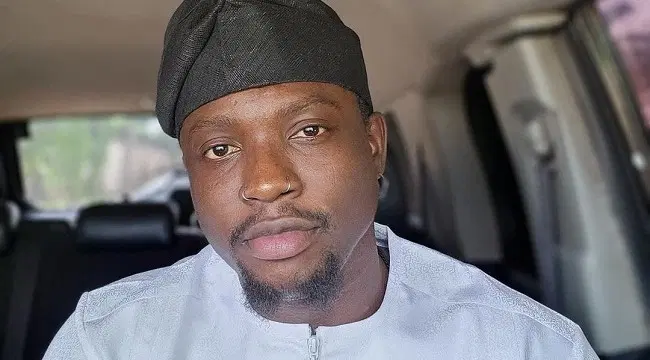
As of early August 2026, Otse is engaged in a direct and escalating dispute with the Nigerian Police Force. The Force confirmed that he had been formally invited by its Criminal Investigation Department in Abuja to provide evidence supporting allegations he made publicly against Assistant Inspector General of Police Jimoh Moshood, who oversees Zone 2 in Lagos, with the invitation dated July 30, 2026. Otse has publicly declined to honor the summons, arguing it is procedurally irregular given that he resides in Abuja, and has alleged that AIG Moshood was wrongly implicated in a double murder investigation as a result of an unrelated land dispute rather than credible evidence.
Otse has since publicly challenged the police over their account of the matter, demanding proof that the invitation letter was in fact sent to him and accusing the Force of making false claims in a subsequent press statement. The exchange has generated significant public debate in Nigeria, with some commentators backing his call for transparency and others urging the public to allow the official investigation to proceed without outside interference. Neither Otse’s underlying allegations against AIG Moshood nor the Police Force’s account of the invitation have been independently verified by InnovationTimes.org, and the matter remains unresolved.
Public Image and Ongoing Significance
Otse’s supporters view him as a rare and necessary check on institutions and individuals that would otherwise face little public accountability in Nigeria, crediting him with recovering funds for defrauded consumers and directing meaningful resources toward humanitarian causes. His critics, including some public figures he has targeted, argue that his methods amount to trial by public opinion, often conducted before formal legal processes have run their course, and point to his repeated arrests and defamation disputes as evidence of a pattern that sits uneasily with the accountability he demands of others.
What is not in dispute is the scale of his reach. Few Nigerian social media figures can claim to trigger the kind of immediate public and institutional response that a VeryDarkMan video routinely produces, whether the target is a small business, a celebrity or, as in his current standoff with the police, a senior law enforcement official. That influence, and the controversy that consistently accompanies it, is likely to keep Martins Vincent Otse at the center of Nigeria’s public conversation for the foreseeable future.
This report is based on publicly available news coverage and prior public statements by Martins Vincent Otse. Claims made by Otse about individuals or institutions, and claims made by institutions about him, are attributed accordingly and have not been independently verified by InnovationTimes.org.