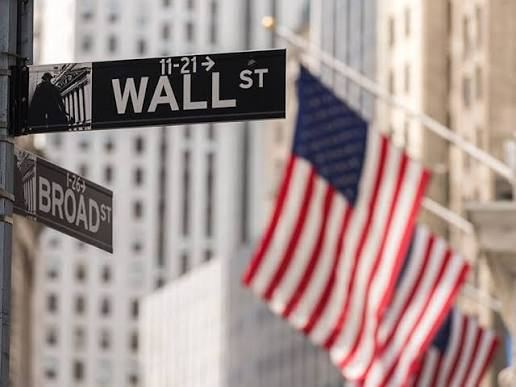
Wall Street’s largest investment banks are facing an increasingly divided capital markets environment, with turbulent financial markets generating substantial trading revenue while uncertainty over interest rates, corporate valuations and the economic outlook threatens to delay major transactions.
Third-quarter earnings reported in October 2026 show how differently these conditions can affect individual banking businesses. Morgan Stanley benefited from a sharp increase in equity trading revenue, while JPMorgan Chase reported a rare quarterly profit shortfall as weaker dealmaking momentum and reduced bond trading activity weighed on its results.
The contrasting performances highlight a central issue for global capital markets: financial market volatility can create opportunities for banks that execute client trades, but the same uncertainty can discourage companies from launching initial public offerings, issuing bonds or completing acquisitions.
Reuters reported on October 14 that Morgan Stanley’s equity trading revenue reached $5.8 billion in the third quarter, an increase of nearly 41% from a year earlier. Its fixed-income trading revenue, however, fell 7.3% to $2.01 billion, showing that market turbulence did not benefit every trading business equally.
JPMorgan Chase faced a different set of pressures. According to Reuters reporting on October 13, the bank reported quarterly earnings of $5.57 per share, below the LSEG analyst estimate of $5.85. Its investment banking fees declined 8% from the previous quarter as activity moderated.
These results arrive at a sensitive moment for investors. Higher borrowing costs can change the economics of corporate transactions, while sharp movements in share prices make it harder for buyers and sellers to agree on valuations. Concerns about artificial intelligence investment, inflation and geopolitical uncertainty have added to the challenges facing financial institutions.
For investors, the earnings season offers a closer look at how banks are responding to changing market conditions. For companies seeking finance, it provides an indication of whether capital markets remain receptive to new transactions. For the wider financial industry, the results raise questions about whether strong trading income can offset slower activity in traditional investment banking.
The answer will depend on how long market uncertainty persists and whether companies that have postponed transactions return when financing conditions become more predictable.
The difference between trading and dealmaking is important because they respond to different market conditions. Trading desks earn revenue by facilitating transactions and managing market exposures for clients. Investment bankers, meanwhile, typically earn fees by advising on acquisitions, arranging securities offerings and helping companies raise capital.
A period of sharp market movements can therefore produce strong trading results even as the number of completed corporate transactions declines.
Morgan Stanley’s third-quarter performance illustrates this distinction. Its equity trading business benefited as investors adjusted portfolios in response to changing economic expectations, interest-rate uncertainty and geopolitical developments.
When markets move rapidly, institutional investors may increase their use of trading services to rebalance holdings, manage risk or respond to new information. This activity can benefit banks with established relationships across asset managers, pension funds, hedge funds and other institutional clients.
However, stronger trading revenue does not automatically indicate that investors have become more confident about the economic outlook. Some transactions reflect defensive adjustments rather than an increase in demand for risky assets.
Banks must also manage their own exposure to market movements. Trading operations can generate substantial income, but they face risks when prices change unexpectedly or when liquidity deteriorates. The quality of risk management remains important even during periods of high client activity.
Fixed-income trading presents a different set of challenges. Bonds respond to changes in interest rates, inflation expectations, government borrowing and perceptions of credit risk. When yields rise sharply, investors may reduce exposures, delay transactions or demand different prices, affecting trading activity and profitability.
Morgan Stanley’s decline in fixed-income trading revenue alongside its equity trading increase demonstrates why investors need to examine individual business divisions rather than relying solely on a bank’s total earnings.
JPMorgan’s results offer another perspective on the changing environment. Its profit missed analyst expectations for the first time in nearly three years, according to Reuters, while management pointed to a more moderate pace of investment banking activity during the quarter.
A slowdown in investment banking can affect several sources of revenue. Companies may postpone equity offerings because they are concerned about valuations, while borrowers may delay bond issuance if financing costs become unattractive. Mergers and acquisitions can also take longer when buyers and sellers disagree about the value of a business.
These delays can create uncertainty for banks that have invested time and resources in preparing transactions. An advisory mandate may require months of negotiations, financial analysis and regulatory preparation before a deal closes. Revenue may not be recognised until the relevant work reaches the required stage or the transaction is completed.
The timing of deals is especially important during quarterly reporting periods. A bank may have a substantial pipeline of potential transactions but still record weaker fees if clients postpone their decisions. Conversely, several large deals closing in the same quarter can strengthen revenue even if overall market activity has not improved consistently.
Bank executives have indicated that some corporate transactions are being delayed rather than abandoned. Reuters reported on October 14 that banking leaders continued to describe their deal pipelines as solid, while acknowledging that rising bond yields and market volatility could temporarily slow activity.
This distinction matters to investors because postponed deals may return when market conditions improve. Cancelled transactions, by contrast, can represent a more lasting loss of business.
The outlook for initial public offerings is particularly sensitive to equity valuations. Companies planning to list shares must decide how much ownership to sell, what price investors might accept and whether the proceeds would justify the cost of becoming publicly traded.
If comparable listed companies experience significant share-price declines, prospective issuers may seek lower valuations than their owners had anticipated. Some businesses may then decide to postpone their offerings rather than accept less favourable terms.
Higher interest rates can intensify this pressure by increasing the return investors expect from risky investments. When safer assets offer more attractive yields, investors may become more selective about companies whose valuations depend heavily on future growth.
Artificial intelligence businesses face particular scrutiny because some companies are committing substantial resources to computing infrastructure, data centres and specialised equipment. Investors are assessing whether the expected revenue from these investments will be sufficient to justify the expenditure and the associated financing costs.
This does not mean that the IPO market has stopped functioning. Companies with strong earnings, credible business plans and clear funding requirements can still attract demand. The challenge is that valuations and market timing have become more important in determining whether a proposed listing proceeds.
The same pressures affect bond markets. Businesses issuing corporate debt must consider benchmark government yields, credit spreads and investor appetite. When borrowing costs rise, a company may decide that issuing debt immediately would be more expensive than waiting or using another source of funding.
Credit quality is especially important for borrowers with substantial existing obligations. Investors may demand higher yields from companies that depend on continued access to financing or whose future earnings are uncertain.
For investment banks, lower issuance activity can reduce underwriting revenue. However, banks may continue to earn income from secondary-market trading, hedging services and other activities that help clients manage their bond portfolios.
The global mergers and acquisitions market faces a similar combination of opportunity and caution. Companies continue to pursue acquisitions to expand operations, gain technology, enter new markets and improve competitiveness. Nevertheless, financing costs and valuation disagreements can make transactions harder to complete.
Reuters reported on October 1 that global merger and acquisition activity totalled $993 billion in the third quarter of 2026, a 41% decline from the second quarter, according to LSEG data. It was the first quarter since the second quarter of 2025 in which the total fell below $1 trillion.
The decline followed a stronger first half of the year, illustrating how quickly deal volumes can change when financing conditions and market sentiment shift. The number and size of major transactions can also influence the results of individual advisory firms because large deals generate significant fees.
Not every part of the market is experiencing the same slowdown. Companies with strong balance sheets may continue pursuing acquisitions because they can finance transactions without relying entirely on expensive borrowing. Strategic buyers may also proceed when a deal offers clear operational advantages that outweigh short-term market uncertainty.
Private equity firms and other financial sponsors must evaluate a different set of considerations. They need to determine whether they can obtain financing on acceptable terms, achieve their expected returns and eventually sell or list the businesses they acquire.
When borrowing costs rise, leveraged transactions can become more difficult to justify. Buyers may respond by lowering their offers, contributing more equity or renegotiating financing arrangements. Sellers who are unwilling to accept lower valuations may decide to wait.
These conditions create an uneven environment for investment banks. Firms with strong trading operations can benefit from increased client activity, while those relying more heavily on transaction fees may experience greater pressure when deal volumes decline.
The latest results also show why bank earnings need to be assessed across multiple reporting periods. One strong quarter of equity trading does not guarantee sustained growth, just as a temporary reduction in advisory fees does not necessarily indicate a long-term decline.
Investors should examine revenue trends across equity trading, fixed-income trading, investment banking, asset management and other business lines. They should also consider expenses, credit provisions, capital requirements and management guidance.
The quality of a bank’s earnings matters as much as the headline figure. Revenue generated through recurring client relationships may offer a different level of predictability from income driven by unusually active markets or the completion of a small number of large transactions.
The economic outlook will remain an important influence on future results. Inflation affects central bank decisions, while interest rates shape the cost of financing for businesses and households. Geopolitical developments can change energy prices, investor confidence and corporate spending plans.
If borrowing costs stabilise and valuations become more predictable, companies may be more willing to resume postponed IPOs, bond offerings and acquisitions. A stronger pipeline of completed transactions could support investment banking revenue in subsequent quarters.
If uncertainty continues, banks may remain dependent on trading activity and other businesses to offset weaker dealmaking. That outcome would not necessarily lead to poor results across the entire industry, but it could produce wider differences between institutions with different revenue sources.
For companies seeking capital, the current environment reinforces the importance of realistic valuations, careful financing decisions and a clear explanation of how funds will be used. Businesses that approach investors with credible financial information may be better positioned to proceed when market conditions permit.
For shareholders, the latest bank earnings demonstrate that a busy trading market is not the same as a healthy market for corporate financing. The number of transactions completed, the cost of borrowing and the willingness of investors to fund new businesses remain important indicators of capital-market confidence.
Wall Street’s third-quarter results therefore reveal a market operating on two different tracks. Trading desks can generate strong revenue as investors react to uncertainty, while corporate transactions face delays because financing and valuations are harder to agree upon.
Whether the gap narrows in the coming quarters will depend on interest rates, investor confidence and the willingness of companies to move forward with major financial decisions. Until those conditions become clearer, bank earnings are likely to remain uneven, with trading performance and investment banking activity telling different stories about the direction of global capital markets.