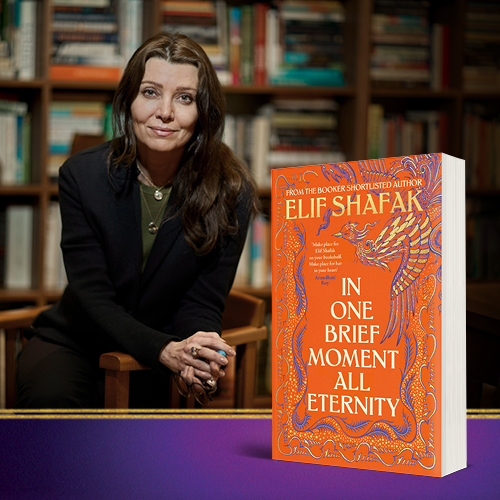
Elif Shafak’s In One Brief Moment All Eternity
Internationally acclaimed novelist Elif Shafak is attracting fresh attention from readers with her upcoming literary work, In One Brief Moment All Eternity, a historical novel that revisits the world of French writer Gustave Flaubert and his famous fictional heroine, Emma Bovary. The book explores questions about literature, memory, identity and the women whose experiences have often been overlooked in traditional accounts of history.
Shafak, known for bestselling novels including The Forty Rules of Love, 10 Minutes 38 Seconds in This Strange World and The Island of Missing Trees, has built an international readership through stories that connect personal experiences with wider historical and cultural questions. Her latest novel continues that approach by examining the relationship between a celebrated male writer, the women around him and the fictional character whose story became one of literature’s most discussed works.
In One Brief Moment All Eternity is scheduled for release in different markets during October 2026 and January 2027. The UK edition is listed for October 2026, while the US edition published by Knopf is scheduled for January 12, 2027. Readers should check the publication date for their region because availability varies between editions.
The novel is particularly appealing to readers who enjoy historical fiction, literary reinterpretations and stories that reconsider familiar works from a different perspective. Rather than simply retelling the story of Madame Bovary, Shafak explores the people and experiences surrounding its creation, asking readers to think about who gets to tell a story and whose voice is left out.
A New Novel From an Internationally Recognised Author
Elif Shafak has established a distinctive place in contemporary literature through her interest in cultural identity, migration, history, family relationships and the power of storytelling. Her novels often move across geographical boundaries, bringing together characters whose lives are shaped by different traditions, social expectations and historical events.
Her previous book, There Are Rivers in the Sky, also demonstrated her interest in connecting individual lives with wider questions about history, humanity and the environment. Shafak’s work has attracted readers across numerous countries, and her books have been translated into many languages.
With In One Brief Moment All Eternity, she turns her attention to the relationship between literary creation and the people who influence it. The novel places Gustave Flaubert, the nineteenth-century French author, at the centre of a story that also gives considerable attention to women whose perspectives have traditionally received less recognition.
This subject offers Shafak an opportunity to examine how celebrated literary figures are remembered and how the stories surrounding them can change when readers consider the experiences of people who have been overlooked.
Flaubert’s Madame Bovary, first published in the nineteenth century, remains a significant work of French literature. Its portrayal of Emma Bovary, a woman dissatisfied with the limitations of her provincial life, has generated discussion about marriage, desire, social expectations and the consequences of pursuing an imagined ideal.
Shafak’s new novel draws on that literary history while developing a broader exploration of the relationship between fiction and real life. The result is a book likely to interest readers who enjoy novels that combine historical settings with questions about literature and society.
A Brief Summary of In One Brief Moment All Eternity
In One Brief Moment All Eternity reimagines the life and literary world of Gustave Flaubert through the perspectives of women who shaped his experiences and the stories associated with him. The narrative includes a devoted nursemaid, an Egyptian dancer and Emma Bovary, Flaubert’s famous fictional creation. By bringing these voices into the foreground, the novel asks what might happen if the people who have been marginalised in traditional accounts were given the opportunity to tell their own stories. Its central concern is not simply the life of a celebrated author, but also the complicated relationship between artistic achievement, personal experience and the people whose lives become part of a writer’s work.
The story travels across different periods and locations, including Flaubert’s childhood, nineteenth-century Paris and places such as Istanbul, Cairo, Palestine and Beirut. These settings connect the characters’ individual experiences with larger questions about political upheaval, injustice, cultural identity and the survival of literature through difficult historical periods. The novel invites readers to consider how memory is shaped, why some voices are preserved while others disappear, and how storytelling can challenge established accounts of the past. Rather than offering a straightforward biography of Flaubert or a direct retelling of Madame Bovary, Shafak creates a broader literary exploration of creativity, forgotten experiences and the enduring importance of giving people the opportunity to speak for themselves.
Why the Novel Is Generating Interest Among Readers
One reason the book stands out is its connection to a familiar literary work. Readers who have studied Madame Bovary may be curious about how Shafak approaches Flaubert’s characters and the historical circumstances surrounding his writing.
For readers who have not read Flaubert’s novel, Shafak’s book offers another entry point into the discussion. Its themes extend beyond the original work, examining how writers represent people, how literary reputations develop and how stories can reflect the social attitudes of their time.
The novel also addresses a continuing question in literature: whose experiences become part of the historical record? Famous writers are often remembered through biographies, critical studies and accounts of their achievements. Yet the people who influenced them may receive much less attention, even when their experiences contributed to the worlds those writers created.
By focusing on the women surrounding Flaubert and his fictional heroine, Shafak encourages readers to reconsider the relationship between authors and the people who inspire their work.
This approach may appeal particularly to book clubs, university literature students and readers interested in feminist literary criticism. It creates opportunities to discuss the difference between a character’s role in a novel and the wider questions that character can raise about social expectations, personal freedom and representation.
The book’s historical settings also provide a wider context for these discussions. Its movement between Europe and the Middle East allows Shafak to connect individual experiences with cultural differences and periods of political change.
Who Should Read In One Brief Moment All Eternity?
The novel is likely to appeal to readers who enjoy literary fiction that examines ideas as well as character development. Those who appreciate historical novels with multiple perspectives may find its approach particularly interesting.
Readers familiar with Shafak’s earlier work may also recognise her interest in cultural encounters, overlooked histories and the connections between individual lives and wider social forces.
Fans of Madame Bovary have another reason to consider the book. Shafak’s reinterpretation provides an opportunity to revisit a classic literary figure through a different narrative perspective. Readers may find it useful to compare the questions raised by Shafak’s novel with their understanding of Flaubert’s original work.
The book may also interest people who enjoy discussions about the role of women in literary history. Its attention to women whose perspectives have been overlooked provides material for examining how literary traditions are formed and how they can be reconsidered.
However, readers should approach the novel as a work of fiction rather than a conventional biography of Flaubert. Although it draws on a real historical writer and a recognised literary work, its narrative uses fictional interpretation to explore broader themes. Readers seeking a strictly factual account of Flaubert’s life may prefer to pair it with a biography or literary history.
Elif Shafak’s Continuing Influence on Contemporary Literature
Shafak’s international readership has grown through her ability to combine accessible storytelling with complex subjects. Her novels often explore questions that cross national and cultural boundaries, making them relevant to readers with different backgrounds and experiences.
Her writing also examines the ways people understand themselves through language, family history, memory and relationships. These themes have helped establish her reputation as a novelist interested in both individual lives and the societies in which those lives unfold.
In One Brief Moment All Eternity continues this literary interest by examining the relationship between storytelling and historical memory. Its focus on Flaubert and the women connected to his literary world creates an opportunity to explore how stories acquire authority and why some perspectives become more visible than others.
For contemporary readers, these questions remain relevant beyond literature. Historical narratives influence how societies understand their past, while stories shape public perceptions of people and events. Reconsidering whose voices are included can therefore change how familiar histories are understood.
The novel’s combination of literary history, historical settings and multiple perspectives may also appeal to readers who prefer books that invite discussion after the final page. Its subject provides opportunities to debate the responsibilities of writers, the relationship between fiction and reality, and the value of recovering neglected experiences.
Publication Details and What Readers Should Know
In One Brief Moment All Eternity is a new historical novel by Elif Shafak, published in different markets on different schedules. The UK edition is listed for October 2026, while the US edition from Knopf is scheduled for January 12, 2027.
Readers should check the publication date and edition available in their country before planning a purchase. The book is positioned within literary and historical fiction, with a narrative centred on Gustave Flaubert, the women connected to his life and the legacy of Madame Bovary.
For readers deciding whether the novel suits their interests, the main attraction is its approach to familiar literary history from perspectives that have received less attention. It combines the life of a major literary figure with an examination of how stories are created, remembered and retold.
The book may be particularly rewarding for readers who enjoy discussing literature rather than simply following a plot. Its questions about representation, historical memory and the lasting influence of fiction provide several possible starting points for further reading.
Final Thoughts
Elif Shafak’s In One Brief Moment All Eternity offers readers a fresh opportunity to explore the relationship between a celebrated author, his fictional heroine and the women whose experiences shaped the world around them. By revisiting the literary legacy of Gustave Flaubert, the novel examines how stories are remembered and what can be learned by listening to perspectives that have often been overlooked.
Readers interested in historical fiction, literary reinterpretations and questions about women’s voices in literature may find the book especially appealing. Its international settings and exploration of storytelling also connect it to broader questions about culture, memory and the way people understand the past.
For anyone looking for a new literary release to discuss, In One Brief Moment All Eternity is a title worth adding to the reading list, particularly for those interested in the continuing conversation around Madame Bovary and the people behind the stories that endure.