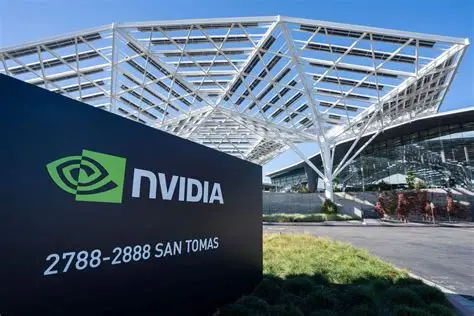
Nvidia, AMD and Micron all closed sharply lower on Wednesday and extended their losses in early trading on Thursday, as a hotter-than-expected inflation report collided with growing unease over how the AI building boom is being paid for. Wall Street’s biggest artificial intelligence names took another beating this week, and the pain spread quickly from New York to Seoul.
The Nasdaq Composite fell nearly 2 percent on Wednesday, shedding more than 500 points, while the S&P 500 dropped 1.11 percent and the Dow Jones Industrial Average slipped just 0.09 percent. That split matters. The damage was concentrated in technology and especially in semiconductors, rather than spread evenly across the market. Nvidia closed at $221.30, down 3.16 percent from the previous session, and traded as low as $219.64 during the day. AMD fell 5.73 percent to $570.82, and Micron lost 4.10 percent. Other chip names followed. TSMC slid 3.40 percent and Broadcom 3.10 percent, according to closing data compiled by market news outlets, while ASML dropped roughly 4 percent.
The trigger for Wednesday’s selling was inflation. September’s consumer price index rose 0.6 percent on the month and 3.7 percent from a year earlier, a reading that came in hotter than economists had expected, with soaring energy prices cited as a major driver. Investors read the numbers as raising the odds that the Federal Reserve will lift interest rates again rather than cut them. Long-dated bond yields rose after the release before trimming some of their gains. For companies whose valuations rest on large profits expected years from now, higher borrowing costs are especially unwelcome, because they lower what those future earnings are worth today and make the debt that funds data centre construction more expensive.
That second point is where the story turns from a routine inflation scare into something more specific to AI. Tech shares were already on shaky ground before the data landed, with elevated yields, rising debt and persistent talk of a bubble weighing on sentiment. Some of the sharpest moves on Wednesday came from companies tied to AI infrastructure spending rather than from chip designers themselves. CoreWeave, a cloud provider that rents out Nvidia hardware, fell more than 15 percent after a chart of its widening bond yield spread circulated on social media. Oracle dropped about 9 percent. A Bernstein analyst, Madison Rezaei, told Investor’s Business Daily that CoreWeave’s unsecured bond yields had approached 15 percent, a level typically associated with financial distress. CoreWeave then fell another 4.5 percent before Thursday’s open, according to premarket reports.
The worry is easy to state. Nvidia and AMD sell the chips, but their customers have to borrow heavily to buy them. If financing costs keep climbing, or if lenders grow nervous about the borrowers, orders could come under scrutiny before any slowdown in current shipments shows up in the numbers. One market commentary noted that chip demand remains strong today and that growth only needs to fall short of the expectations built into share prices for the stocks to suffer. Dan Ives, a technology analyst at Yorkville Ives, said the latest selling reflects concern about the cost of financing massive infrastructure projects.
By Thursday the rout had gone global. CNBC reported that the 20 most valuable AI and semiconductor stocks worldwide had shed more than $1 trillion in market value so far this week. In premarket trading in the United States, Nvidia was down about 1.8 percent, Micron about 4.4 percent and AMD about 3.5 percent. In Asia the moves were far larger. SK Hynix, the South Korean memory chip maker, plunged more than 10 percent, and rival Samsung Electronics fell more than 8 percent, with South Korea’s benchmark KOSPI index reaching a six-month low. Japanese and European hardware shares also came under pressure.
Memory makers have their own set of concerns. Analysts and market reports pointed to worries that the memory chip market could face oversupply as early as 2029, as manufacturers expand capacity to meet AI demand. Earlier this week, memory stocks also dropped on concerns about rising competition from China. That helps explain why Micron and the South Korean producers have been hit harder than some of their larger peers, even though demand for the high-bandwidth memory that goes into AI accelerators is still widely described as robust.
There is a counterweight to the gloom. TSMC, the world’s largest contract chipmaker, reported record quarterly results, and the strength of its numbers has supported the view that AI hardware demand has not collapsed. Yet its shares still fell about 3 percent, which shows how little comfort good results provided on a day when the market was repricing risk. No fetched report named a company-specific reason for Nvidia’s decline, and the stock fell by more than the Nasdaq as a whole, which points to broad exposure to the sector rather than one piece of bad news. Nvidia now sits roughly 9 percent below its 52-week high of $243.37.
It is also worth putting the week in context. This is not the first chip selloff of 2026. Semiconductor shares set a record in June and have swung sharply since, including a sizeable rout in July when investors questioned whether the largest technology companies could keep spending so heavily on AI. The Philadelphia Semiconductor Index had risen strongly for the year before that pullback, so even sharp declines have so far come after very large gains. Whether the current drop is another shakeout or the start of something deeper depends largely on the next set of inflation figures, on the Federal Reserve’s response, and on whether the debt markets that support AI projects stay open.
Several indicators will be worth watching in the coming days. The first is the path of bond yields and the next Fed signals, since higher rates are the common thread running through this week’s selling. The second is the credit market for AI infrastructure companies, where CoreWeave’s borrowing costs have become an informal gauge of stress. The third is guidance from chip makers and their biggest customers about spending plans for next year. Strong commitments would ease fears, while any hint of cutbacks would intensify them. Readers who want more background on how AI hardware demand is shaping technology markets can find related coverage at Innovation Times.
For individual investors, the practical lesson is that volatility in a sector that has run so far so fast is not unusual, and it is not a reliable signal in either direction. This article is for information only and is not investment advice. Anyone making decisions about Nvidia, AMD, Micron or any other stock should weigh their own goals and risk tolerance and consider speaking with a licensed financial adviser.