Global Interest Rates Today: Inflation Puts Central Banks Under Pressure
Inflation has returned to the centre of the global financial debate after fresh US data showed that consumer prices rose faster than expected in September, forcing investors to reconsider how major central banks may respond in the coming weeks. The latest figures have unsettled stock markets, shifted expectations for borrowing costs and raised questions about whether policymakers can contain price increases without putting additional pressure on economic growth.
The immediate concern is the United States, where annual consumer price inflation reached 3.7% in September 2026. The increase was driven partly by a sharp rise in gasoline prices, but the implications extend beyond fuel costs. Higher inflation can make it harder for the Federal Reserve to ease monetary policy, especially when households and businesses are already facing elevated borrowing costs.
The development has consequences for financial markets around the world. US interest-rate decisions influence international investment flows, currency movements, government bond yields and the cost of financing for companies and governments. When investors believe rates may remain high for longer, they often reassess the value of stocks and other assets whose prices depend on expectations of future growth.
The Federal Reserve has already raised its target interest-rate range to 3.75% to 4.00% following its September 17 decision. The latest inflation report has renewed speculation about another increase, although a further move is not guaranteed. Policymakers must weigh the risk that inflation remains persistent against the possibility that additional tightening could weaken employment, consumption and business investment.
That uncertainty has made the next round of economic data particularly important. Investors are watching producer prices, retail sales, employment conditions and comments from central bank officials for evidence of whether inflation is spreading more broadly or remains heavily influenced by energy costs.
The distinction matters. If higher fuel prices feed into transport, food distribution and other business expenses, companies may pass more costs on to consumers. If the increase proves temporary and other price measures remain contained, policymakers could have more room to wait before making another decision.
The Federal Reserve’s challenge is therefore not simply to react to one inflation report. It must determine whether the broader economy is generating price pressures that could persist even if energy prices stabilise.
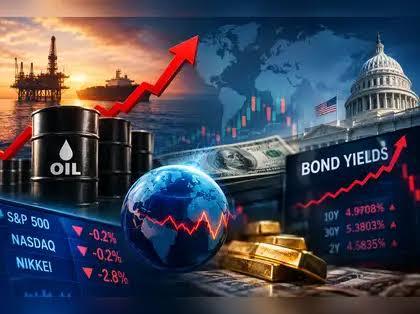
The latest figures have already affected market behaviour. US equities declined on October 14, with the S&P 500 falling 1.1% to 7,718.94 and the Nasdaq Composite losing 1.9% to 26,692.87. Technology shares came under particular pressure as investors reassessed the cost of financing ambitious growth plans and the valuations attached to artificial intelligence-related businesses.
The sell-off continued across Asian markets on October 15. South Korea’s KOSPI plunged almost 8%, while Japan’s Nikkei 225 dropped about 5% during the session. The movements reflected several concerns, including higher interest-rate expectations, heavy exposure to semiconductor companies and questions about whether the recent enthusiasm for artificial intelligence has pushed some share prices too far.
The market reaction demonstrates how monetary policy affects more than banks and borrowers. Higher rates increase the discount investors apply to expected future earnings, which can reduce the present value of companies expected to deliver much of their growth years from now. Technology businesses that depend on large investments in data centres, computing equipment and infrastructure can also face higher financing costs.
However, the latest declines do not establish that the artificial intelligence industry is losing its commercial importance. Rather, investors are becoming more selective about valuations, funding arrangements and the time businesses may need to turn investment into sustainable profits.
Central banks outside the United States face related but different pressures. Their decisions depend on domestic inflation, wage growth, economic activity and currency movements. They cannot simply copy the Federal Reserve because the same global shock can affect countries in different ways.
In the United Kingdom, inflation and the outlook for household spending remain important considerations for the Bank of England. Interest rates influence mortgage payments, consumer credit and the cost of financing for businesses. Holding rates high can help limit demand and reduce inflationary pressure, but it can also weigh on investment and leave households with less money available for other spending.
The policy challenge is especially difficult when inflation is being driven by supply-side factors rather than strong consumer demand. Higher energy prices, shipping disruptions or rising imported costs can push inflation up even when economic growth is weak. Raising interest rates cannot directly produce more oil, lower freight costs or repair a disrupted supply chain. It can, however, reduce the risk that an initial price shock becomes embedded in wage negotiations and wider pricing decisions.
The European Central Bank faces a similar balancing act across an economy made up of countries with different growth rates, debt levels and exposure to energy prices. If inflation remains stubborn, policymakers may need to maintain restrictive conditions for longer than businesses and borrowers would prefer. If economic activity weakens substantially, the case for additional tightening becomes less straightforward.
For Europe, energy prices remain a particularly important variable. A fall in oil prices can ease some inflation pressure by reducing fuel and transport costs, but the effect is not immediate or uniform. Retail prices may adjust gradually, and the final impact depends on taxes, currency movements, refining costs and distribution expenses.
On October 15, Brent crude fell by around 2% to approximately $103.78 a barrel during trading, as market participants considered possible changes to US restrictions affecting Russian oil shipments alongside continuing geopolitical risks. The decline offered some relief after recent energy-price pressures, but prices remained high enough to keep inflation concerns alive.
This creates a complicated picture for central banks. A sustained fall in oil prices could reduce headline inflation and help ease pressure on households. Yet if geopolitical tensions disrupt supply again, energy costs could rise quickly and complicate policy decisions. Monetary authorities must therefore distinguish temporary market movements from a durable change in the inflation outlook.
Currency markets add another layer of uncertainty. Interest-rate expectations can influence the relative appeal of currencies because investors compare the returns available in different economies. If US rates are expected to remain higher than those elsewhere, the dollar may attract demand. A stronger dollar can make imported goods cheaper for American buyers, but it can increase the local-currency cost of dollar-priced commodities and debt for many other countries.
A weaker dollar can ease some pressure on borrowers and importers outside the United States, although the effect depends on each country’s trade structure and monetary conditions. For emerging economies, currency stability matters because sharp exchange-rate movements can affect inflation, foreign investment and the cost of servicing external debt.
Countries with substantial dollar-denominated borrowing may find that high US interest rates tighten financial conditions even when their own central banks have not raised rates. Investors may demand higher returns to hold riskier assets, while governments and companies face more expensive refinancing. These pressures can limit public spending and business expansion, particularly where access to international capital is already constrained.
Nigeria is among the economies that need to monitor these international developments closely. Oil revenue, foreign-exchange supply, imported inflation and access to foreign financing all influence domestic economic conditions. Changes in global oil prices can affect government receipts and foreign currency inflows, while a stronger dollar and elevated international financing costs can complicate the management of exchange-rate and inflation pressures.
The relationship is not automatic. Higher crude prices can improve export earnings for an oil-producing country, but they can also increase domestic fuel and transport costs. Lower prices may reduce some inflation pressures while weakening government and foreign-exchange revenue. The overall effect depends on production levels, fiscal policy, domestic energy arrangements and the ability to convert export receipts into usable foreign currency.
For businesses, uncertainty over interest rates makes planning more difficult. Companies considering new factories, equipment, technology systems or property investments must estimate whether future revenue will justify financing costs. When borrowing remains expensive, some projects may be delayed, while firms may conserve cash, renegotiate credit facilities or focus on improving productivity.
Smaller businesses can be particularly exposed because they often have less access to affordable long-term finance than large corporations. Higher lending rates can raise the cost of working capital, making it more difficult to purchase inventory, pay suppliers and expand operations. If these businesses reduce investment or hiring, the effects can eventually spread through the wider economy.
Households also feel the consequences. People with variable-rate loans or mortgages may face higher payments when rates rise, while those seeking new credit can find that borrowing becomes less affordable. Savers may benefit from better deposit returns, but the benefit depends on whether banks pass policy-rate changes on to customers and how those returns compare with inflation.
The impact on employment is less immediate but equally important. Higher rates can reduce demand for homes, vehicles and other credit-sensitive purchases. Businesses may respond by slowing recruitment or postponing expansion. Central banks must consider these effects while trying to prevent inflation from becoming entrenched.
Investors, meanwhile, are likely to focus on the gap between what markets expect and what central banks actually deliver. A rate increase that has been widely anticipated may have a limited market impact, while an unexpected decision or a change in official guidance can trigger larger movements. Inflation releases, employment figures and retail-sales reports may therefore produce sharp reactions even when the underlying economic picture has changed only modestly.
The latest market volatility also highlights the importance of looking beyond a single index or headline. A broad decline in shares does not necessarily mean that every sector faces the same outlook. Banks may respond differently from technology companies, energy producers may benefit from some commodity-price movements, and businesses with strong cash flows may be more resilient than heavily indebted competitors.
For now, the key question is whether the September US inflation increase signals a sustained acceleration in prices or a more concentrated energy-driven shock. The answer will influence expectations for Federal Reserve policy and may shape decisions by investors, companies and other central banks.
The next set of US producer-price and retail-sales figures will provide additional evidence about business costs and consumer demand. Neither release will settle the debate on its own, but together with employment and inflation data, they can help establish whether the economy is cooling enough to reduce price pressure.
Central banks face no easy choice. Keeping interest rates high for longer may help contain inflation expectations, but it can also deepen financial pressure on borrowers and slow economic activity. Easing policy too soon could allow inflation to persist and require more disruptive action later.
The coming weeks will be important for markets as policymakers assess the evidence. Until the inflation outlook becomes clearer, investors should expect interest-rate expectations to remain sensitive to new data, while businesses and households continue to navigate a world in which borrowing costs, energy prices and economic growth remain closely connected.