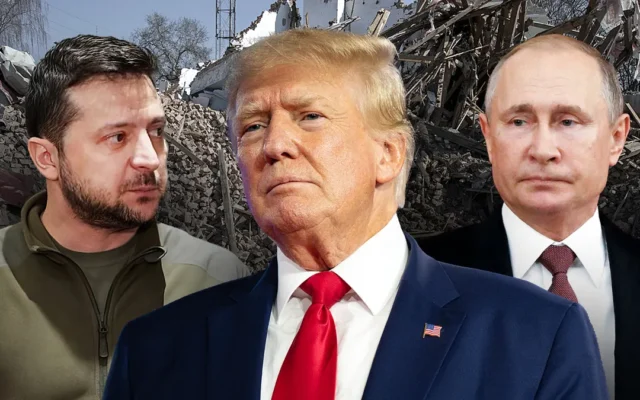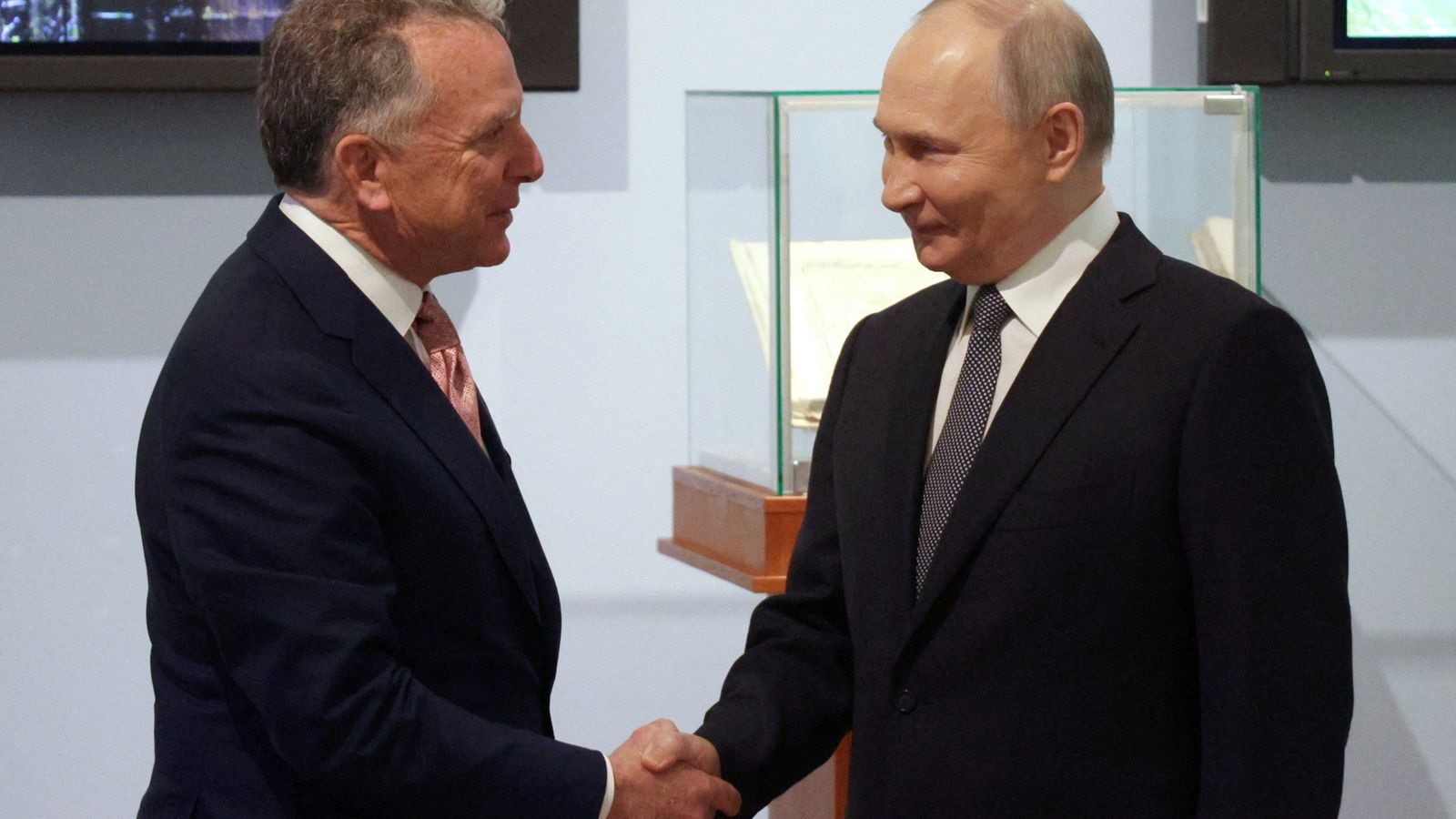
The United States is preparing another diplomatic push to end Russia’s war against Ukraine, with special envoy Steve Witkoff expected to travel to Russia after discussions in Oslo with Ukrainian President Volodymyr Zelenskyy and European leaders.
The planned visit signals a renewed effort by Washington, Kyiv and European partners to develop proposals that could eventually be presented to Russian President Vladimir Putin, even as disagreements over military support, sanctions and the terms of a settlement continue to complicate negotiations.
According to Axios, an American official said Witkoff was expected to take ideas developed through consultations with Ukrainian and European representatives to Russia following the Oslo discussions. The proposed diplomatic process is intended to explore ways of moving the conflict towards negotiations, although key details of the proposals have not been made public.
Axios
+1
The initiative comes at a critical moment for Ukraine, whose government is seeking to preserve international support while resisting pressure to accept an agreement that could compromise its security or territorial integrity.
For the Trump administration, the challenge is to turn renewed diplomatic engagement into a process that can secure participation from Moscow without alienating Kyiv or Washington’s European partners.
The planned Russia visit has not, by itself, produced an agreement to end the war. Its significance lies in the possibility of establishing a more coordinated negotiating position before American representatives engage directly with the Kremlin.
Witkoff’s discussions in Oslo involve Zelenskyy, Norwegian Prime Minister Jonas Gahr Støre and Finnish President Alexander Stubb. Jared Kushner, who has participated in the administration’s diplomatic efforts, was also expected to join remotely.
The meetings come as relations between Trump and Zelenskyy have deteriorated. The American president has criticised the Ukrainian leader’s approach to negotiations and questioned whether he is helping advance a settlement.
Those comments have heightened concerns in Kyiv about the reliability of future American assistance, particularly as Ukrainian forces continue to face Russian attacks and demand additional air defence capabilities.
The diplomatic disagreement has also raised questions about how the United States intends to balance its relationship with Russia against its commitments to European security.
Ukraine has argued that any peace agreement must include credible arrangements to prevent Russia from launching another invasion. Kyiv has also insisted that its government must be involved in decisions concerning its future.
European leaders share concerns that a settlement reached without meaningful Ukrainian participation could leave the country vulnerable and undermine wider European security.
The proposed diplomatic process therefore faces several difficult questions. These include the future status of occupied Ukrainian territory, the nature of any security guarantees, the sequencing of a ceasefire and the mechanisms required to monitor compliance.
Russia and Ukraine have maintained significantly different positions on these matters, and no public announcement has established that the two sides have agreed on a common negotiating framework.
Witkoff’s expected visit could provide an opportunity to communicate proposals directly to Moscow, but the outcome will depend on Russia’s response and whether the proposals can address the fundamental disagreements separating the parties.
For Kyiv, the timing is particularly sensitive because the country is also seeking to maintain access to military equipment, intelligence and technological support.
Zelenskyy has raised concerns about delays in American military assistance, including air defence supplies, as well as disruptions affecting satellite services used by Ukrainian forces.
The issues matter because Ukraine continues to rely on external partners for some of its most important defence capabilities. A reduction in support could complicate its ability to protect cities, critical infrastructure and military positions.
European governments have increased their assistance to Ukraine, but the extent to which they can replace specific American capabilities remains an important consideration in planning for the future.
The negotiations are also unfolding against a background of continuing Russian attacks. The Associated Press reported on October 20 that Russian missile and drone strikes had killed at least seven people in Ukraine and caused power outages in several regions.
The attacks underline the distance between diplomatic efforts and conditions on the ground. Even if negotiators make progress, any arrangement would need to account for the continuing risks faced by civilians and the vulnerability of essential infrastructure.
Energy facilities, transport networks and other critical systems have repeatedly been affected by the conflict. Damage to these assets creates additional financial pressures for Ukraine, complicates economic recovery and increases the need for international assistance.
For European governments, the war has also reinforced concerns about the continent’s defence readiness and its dependence on American military resources.
The future of US involvement is consequently important not only to Ukraine but also to NATO allies assessing their own security requirements.
A credible diplomatic settlement could reduce the immediate risks associated with continued fighting. However, governments will need to consider whether any agreement offers sufficient guarantees to prevent renewed hostilities.
A ceasefire without reliable monitoring arrangements could be difficult to enforce. Similarly, promises of future assistance may be insufficient if Ukraine’s partners cannot agree on how those commitments would operate in a crisis.
These questions are likely to influence discussions about security guarantees, international monitoring and the role European countries could play in supporting a settlement.
Moscow’s response will be equally important. Russia has pursued its own military and political objectives throughout the conflict, and a successful negotiation would require agreement on matters that remain deeply contested.
The Kremlin would need to decide whether the proposals under discussion offer terms it is prepared to consider. Ukraine and its partners, meanwhile, would need to assess whether any Russian commitments are sufficiently credible to support a lasting agreement.
The Trump administration has presented ending the war as a diplomatic priority, but progress has been complicated by conflicting demands and disagreements about the concessions required from each side.
The planned sequence of talks in Norway followed by a possible visit to Russia suggests that Washington is attempting to maintain direct channels with both Kyiv and Moscow.
Such engagement can help clarify positions and identify areas for negotiation. It does not, however, guarantee that the parties will accept the same terms or that a ceasefire will follow.
European involvement could prove important in bridging differences between Washington and Kyiv. Norway and Finland have strong interests in regional security, while other European governments have repeatedly argued that Ukraine’s future cannot be separated from the security of the wider continent.
Maintaining coordination among these partners may help prevent diplomatic divisions from weakening the negotiating process.
For Ukraine, the immediate priority remains securing a settlement that preserves its independence and provides meaningful protection against future aggression. For Russia, the negotiations will test whether Moscow is prepared to compromise on demands it has defended throughout the conflict.
For Washington, the objective is to establish whether diplomacy can produce concrete progress without creating further instability in relations with European allies.
The economic implications are also significant. Continued fighting requires substantial public spending, damages productive infrastructure and creates uncertainty for investors. A durable peace could improve the conditions for reconstruction and economic recovery, although rebuilding Ukraine would require considerable resources and sustained international cooperation.
The war has also affected international energy markets, trade routes and government budgets across Europe. Any reduction in hostilities could influence these pressures, but the effects would depend on the terms of a settlement and the pace of economic recovery.
Businesses and investors are likely to watch diplomatic developments for signs that security risks are easing. Nevertheless, it would be premature to assume that a planned diplomatic visit will immediately change energy prices, trade conditions or investment decisions.
The central test will be whether the discussions produce proposals that all relevant parties are prepared to consider seriously.
As the diplomatic process develops, governments will need to communicate clearly about what has been agreed, what remains under discussion and which commitments would be required to implement a settlement.
At present, the expected Russia visit represents a potential next step in negotiations rather than a confirmed breakthrough. No final peace agreement has been announced, and major disagreements over security, territory and the future relationship between Russia and Ukraine remain unresolved.
The coming discussions could nevertheless help establish whether a coordinated negotiating process is possible. Their success will depend on whether the parties can move beyond public disagreements and identify terms that can be implemented and sustained.
For Ukraine and its European partners, the objective is to ensure that diplomatic progress does not come at the expense of long-term security. For the United States, the challenge is to turn its renewed engagement into practical results.
The planned visit to Russia will therefore be closely watched by governments seeking an end to the conflict and by millions of people whose lives continue to be affected by the war.