
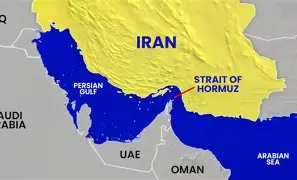
The global energy crisis deepened this week as peace talks between the United States and Iran stalled again, sending oil prices surging and renewing fears about when supply through the Strait of Hormuz will resume. Brent crude crossed $104 per barrel on Sunday, while US crude climbed to $98.48 per barrel, both driven by renewed uncertainty over Iran’s nuclear program and its willingness to end a months-long conflict with the United States.
President Donald Trump rejected Iran’s latest counter-proposal on Sunday, posting on his Truth Social platform that the Iranian response submitted through Pakistani mediators was “TOTALLY UNACCEPTABLE.” Iran’s counter-proposal, according to Iranian state media, demanded US recognition of Iranian sovereignty over the blockaded Strait of Hormuz, the release of frozen Iranian assets, the lifting of all sanctions, and compensation for war damages. Critically, the proposal said nothing about Iran’s nuclear program, which Trump has identified as the core red line.
The consequences of this prolonged standoff are cascading across the world. The International Energy Agency describes the current disruption as the most severe oil supply shock in history. Goldman Sachs has estimated that attacks on regional energy infrastructure and the effective closure of the Strait of Hormuz have cut global oil production by 14.5 million barrels per day, a 57 percent decline in output from that critical region.
In Africa, the impact is especially stark. Countries like Kenya, which hold no significant oil reserves, are seeing their economies buckle under the weight of high fuel import costs. A Nairobi taxi driver told reporters he now covers only half the distance he used to drive each day because petrol costs too much. The World Bank has warned that 2.4 million Kenyans could fall into poverty because of the crisis. Kenya is reportedly considering a $600 million emergency loan from the World Bank to cover rising subsidy costs.
Meanwhile, oil-producing nations in Africa are seeing extraordinary windfalls. Nigeria’s Bonny Light crude has risen 66 percent since the war began, climbing from roughly $70 per barrel to an average of $116.84. US investment firm Vanguard reported that Nigerian oil companies earned a $4 billion windfall from the price surge. The war has created a split on the African continent between resource-rich nations riding the oil price wave and import-dependent nations sinking under it.
In the United States, Energy Secretary Chris Wright is exploring emergency measures including tapping the Strategic Petroleum Reserve, revising EPA regulations on gasoline blends, and asking refiners to shorten maintenance schedules to keep production volumes high. The administration is also considering a federal gas tax suspension. Wright told NBC’s Meet the Press that the administration supports every possible measure to lower prices at the pump, but he declined to predict exactly when relief would arrive.
Read More: AI Goes Regulated: US Government Forces Major Tech Companies to Submit Models for Pre-Release Testing in Historic Policy Shift That Redefines Artificial Intelligence Development
Trump has launched what his administration calls “Project Freedom,” a plan to escort commercial ships out of the Strait of Hormuz. Iran has warned that any US military escort through the strait would constitute a ceasefire violation, raising the risk of direct military confrontation.
The road ahead looks difficult. Without a ceasefire agreement with Iran or an alternative route for global oil to flow, prices will remain elevated through the summer and possibly beyond. Governments across Europe, Asia, and Africa are implementing demand reduction measures. Central banks are facing renewed inflation pressure at a time when many had hoped interest rate cuts were near. The next round of US-Iran talks, if they happen, will determine whether the world gets energy relief or faces another painful quarter of high prices.