
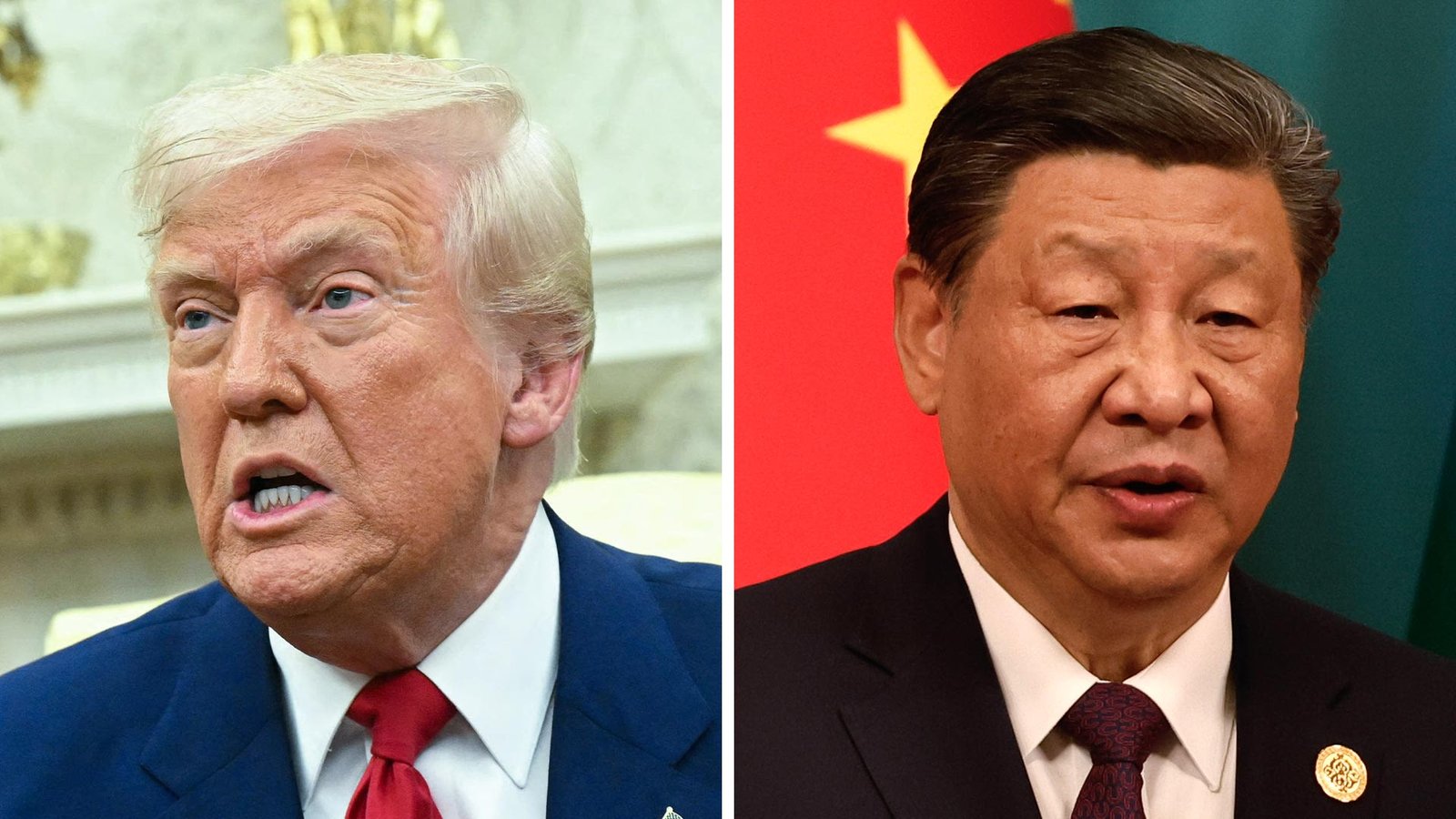
The most consequential meeting between two world superpowers in more than a decade is now underway in Beijing, and the outcome will determine the direction of the global economy, energy markets, and the technology race for years to come. U.S. President Donald Trump and Chinese President Xi Jinping sat down Monday for high-stakes talks that analysts say carry more immediate consequences than any bilateral summit since the Cold War era.
The agenda covers a sweeping range of issues: trade tariffs, technology decoupling, rare earth export controls, Taiwan, the ongoing Iran war, and artificial intelligence governance. Every major economy on the planet has a stake in this room.
The summit arrives at a moment of extraordinary global pressure. Since February 28, 2026, the United States and Israel launched coordinated airstrikes on Iran under Operation Epic Fury, triggering what the International Energy Agency now calls “the greatest threat to global energy security in history.” Iran’s closure of the Strait of Hormuz shut down roughly 25% of the world’s seaborne oil trade and 20% of its liquefied natural gas supply. Brent crude has surged past $113 per barrel this week alone, and analysts warn prices could reach $170 or even $200 a barrel if the Strait remains blocked into the summer.
Beijing and Washington both feel this crisis acutely. China receives nearly a third of its oil through the Strait of Hormuz. The United States, meanwhile, is the world’s largest LNG exporter and benefits from rising prices domestically, but it faces political pressure as gas prices across America now hover around four dollars per gallon, up more than a dollar since the war began.
Prior to the summit, U.S. Treasury Secretary Scott Bessent and Chinese Vice Premier He Lifeng held preliminary talks in South Korea to stabilize the economic relationship after months of escalation. Washington has imposed sanctions on Chinese refiners buying Iranian crude. Beijing responded with an unprecedented ban on semiconductor exports from Nexperia China and suspended exports of rare earths and critical magnets that power global automakers. The supply chain consequences hit Germany, Japan, and South Korea particularly hard.
Analysts at Teneo’s political risk unit say both sides want to prevent further escalation from derailing last year’s truce. Chad Bown, a senior fellow at the Peterson Institute for International Economics, stated plainly: “Virtually everyone has a stake in the outcome of this meeting.”
One scenario drawing significant attention is a potential joint energy deal in which Beijing agrees to purchase more U.S. oil and gas while Washington supports efforts to reopen the Strait of Hormuz. Southeast Asian governments, which depend heavily on Gulf oil, have called repeatedly for free passage through the Strait. Singapore officials say the energy shock is taking a measurable economic toll across the region.
However, the summit carries deep risks, not just opportunities. A breakdown in talks could extend energy market volatility and accelerate the economic decoupling that both economies privately fear. The AI race sits at the center of tensions. Washington has accused Beijing of running industrial-scale campaigns to steal American AI technology. China has ordered its companies not to comply with U.S. export controls on advanced chips.
Read More: Trump-Xi Beijing Summit 2026: What Is at Stake for the Global Economy, Energy Markets, and the Future of US-China Trade
Trump has signaled interest in having Xi visit Washington later this year, which would mark the first time the Chinese leader has traveled to the U.S. capital in a decade. Whether that invitation survives the outcome of this week’s talks remains the defining question of global diplomacy in 2026.
For the world’s 8 billion people, most of whom never attend a summit, the consequences will arrive in fuel bills, grocery prices, smartphone costs, and job markets. The Beijing summit is not merely a diplomatic event. It is an inflection point for a world that is simultaneously fighting an energy war, an AI competition, and a growing ideological divide between democratic and authoritarian governance.
Markets across Asia opened with cautious optimism Monday morning. European and American futures point to a watchful trading session. The world is watching Beijing.