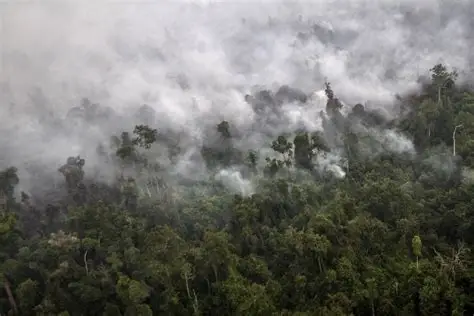
Indonesia is testing an unusual weather-modification technique as widespread forest and peatland fires send hazardous smoke across Southeast Asia, worsening air pollution, disrupting daily life and forcing neighbouring Timor-Leste to suspend in-person classes for three days.
The trial, announced for Thursday, October 15, 2026, involves dispersing dry ice from aircraft over South Sumatra in an attempt to encourage cloud formation and help produce rainfall. Indonesian authorities are exploring the approach after prolonged fires, water-bombing operations and earlier cloud-seeding efforts failed to bring the crisis under control.
The emergency has become a regional environmental and public health concern. Smoke from burning forests, plantations and degraded peatlands has affected communities across Indonesia, Singapore, Malaysia, the Philippines and Timor-Leste. Authorities and health officials are facing growing pressure to protect residents from dangerous airborne particles while firefighters continue trying to contain the blazes.
The scale of the crisis is substantial. Reports published on October 15 indicate that fires have burned close to 900,000 hectares across Indonesia since the beginning of the year, making 2026 one of the country’s most severe fire seasons in more than a decade. The precise area affected varies between reporting periods and assessments, but the scale of destruction has raised fresh concerns about land management, peatland protection and the effectiveness of fire prevention policies.
The dry ice operation is an experimental measure, not a proven solution to the underlying problem. Its immediate purpose is to influence local cloud formation, while the larger challenge is extinguishing fires that can continue smouldering beneath the surface of peat-rich ground.
Indonesia’s decision to test dry ice reflects the difficulty of dealing with fires that persist through extended dry weather. The government has already used aircraft for water bombing and cloud seeding, alongside deploying large numbers of personnel to fight fires on the ground. Officials say the new method will first be evaluated before any decision is made about expanding it to other affected areas.
According to reporting by Reuters, Indonesia has deployed more than 69,000 firefighting personnel as the crisis has intensified. The government has also pledged to address damage to peatland ecosystems, which officials identify as a major factor contributing to the severity of the fires.
The dry ice trial is being conducted over South Sumatra, with the provincial capital, Palembang, among the areas targeted. Dry ice is solid carbon dioxide. When released into suitable atmospheric conditions, it can encourage ice-crystal formation in clouds. Under the right conditions, this process may contribute to precipitation, although its effectiveness depends on factors including moisture, temperature and the presence of suitable clouds.
The technique is not the same as dropping dry ice directly onto burning forests to extinguish flames. Instead, it is a form of weather modification intended to encourage rainfall that could help suppress fires and reduce the persistence of smoke. Its success will depend on the weather conditions at the time of deployment, and the operation cannot guarantee that rain will fall where it is most needed.
Authorities have said the results will be assessed before the technique is considered for use elsewhere. That cautious approach is important because the immediate impact of the trial may be limited if dry conditions continue or if the fires remain active across large areas.
Indonesia’s problem is particularly difficult because peatland fires can burn below the visible surface. Peat consists of partially decomposed organic material that has accumulated in waterlogged environments over long periods. When peatlands are drained or degraded, the material becomes more vulnerable to ignition. Once a fire takes hold, it can smoulder underground, making it harder to detect, reach and extinguish than flames burning across the surface.
These fires can continue producing smoke even when visible flames have diminished. Underground burning may also persist until the peat is sufficiently rewetted, allowing fires to reignite if conditions remain dry. This is one reason firefighting teams cannot rely on aerial water drops alone to bring every affected area under control.
Indonesia has extensive peatland areas across Sumatra and Kalimantan, the Indonesian portion of Borneo. Environmental damage, drainage, land conversion and the use of fire to clear land have contributed to the vulnerability of some landscapes. El Niño-related drought conditions have further increased the risk by reducing moisture and allowing fires to spread more readily.
The government has attributed part of the current crisis to historical peatland degradation associated with land-development projects. Officials have pledged to restore damaged ecosystems and improve water management. Those measures could help reduce the likelihood of future fires, but restoration requires sustained work and cannot deliver immediate relief to communities already breathing polluted air.
The crisis is also drawing attention to the role of land-clearing practices. Burning can be used to clear vegetation for agricultural activities, but fires may escape their intended boundaries, particularly during prolonged drought. Effective prevention therefore depends on enforcement against illegal burning, better land management, monitoring of fire hotspots and action against companies or individuals responsible for damaging protected or vulnerable areas.
At the same time, the immediate emergency cannot wait for long-term reforms. Fire crews must contain active blazes, emergency agencies must communicate risks to the public, and health services need to prepare for an increase in patients experiencing breathing difficulties.
The effects are already being felt beyond Indonesia’s borders. Timor-Leste began a three-day suspension of in-person school activities on Thursday, October 15, after authorities warned that haze from fires in neighbouring areas and countries was contaminating the air. The government urged families to keep children indoors where possible and advised people to use respiratory protection when going outside.
The school closures highlight how quickly smoke pollution can become an international problem. Timor-Leste shares the island of Timor with Indonesia’s East Nusa Tenggara province, and air pollution can cross national boundaries regardless of where fires originate. Although the government’s announcement referred to pollution from neighbouring regions and countries, the wider regional emergency has been strongly linked to Indonesia’s ongoing wildfires.
Singapore has also experienced a sharp deterioration in air quality. On Wednesday, October 14, its one-hour PM2.5 reading reached 284 micrograms per cubic metre in the western part of the city-state, placing the measurement in the National Environment Agency’s highest category for the current haze episode. PM2.5 refers to fine particles with a diameter of 2.5 micrometres or less that can penetrate deep into the respiratory system.
Singapore has reintroduced subsidies for haze-related medical treatment and begun distributing N95 masks to eligible residents when pollution reaches very unhealthy levels. Several Malaysian states have also experienced disruption, including school closures, while haze has spread to parts of the Philippines.
The severity of the pollution varies by location and time, depending on wind direction, rainfall, fire activity and local weather conditions. Air quality readings can change quickly, so residents should follow current advice from their national environmental and health authorities rather than assume that conditions are the same across the region.
The health risks are a major concern because wildfire smoke contains a mixture of fine particles and gases. The composition depends on what is burning, but smoke from forests, peat and other organic material can irritate the eyes and airways and aggravate existing respiratory conditions. People may experience coughing, shortness of breath, wheezing or discomfort in the chest. Exposure can be especially concerning for children, older adults, pregnant people and individuals with asthma, heart disease or other chronic conditions.
The World Health Organization explains that fine particulate matter is associated with respiratory and cardiovascular disease because the smallest particles can travel deep into the lungs and, in some cases, enter the bloodstream. Its guidance on ambient air pollution and health describes the wider health burden caused by polluted air.
During severe haze episodes, reducing exposure is a practical priority. People should limit strenuous outdoor activity when local authorities advise against it, keep windows and doors closed when outdoor pollution is high if indoor conditions allow, and use appropriately fitted particulate-filtering masks when advised or when outdoor exposure cannot be avoided. Anyone experiencing severe breathing difficulty or chest pain should seek urgent medical attention.
Schools and other institutions also need clear procedures for responding to deteriorating air quality. These may include suspending outdoor activities, moving lessons indoors when the building offers adequate protection, monitoring official air-quality alerts and temporarily closing facilities when conditions become unsafe. Timor-Leste’s decision demonstrates how environmental emergencies can interrupt education even when schools are far from the original fires.
The broader economic consequences are also significant. Poor visibility can disrupt road, sea and air transport, while workers may struggle to carry out outdoor jobs safely. Businesses can face interruptions, and households may incur additional costs for masks, medical consultations and other protective measures. Tourism and other sectors that depend on reliable transport or outdoor activity can also be affected.
For Indonesia, the crisis presents a challenge that goes beyond emergency firefighting. The government must manage immediate risks while addressing the environmental conditions that allow peatland fires to become widespread and persistent. That includes improving the management of drained peatlands, preventing unlawful land clearing, enforcing fire regulations and strengthening early-warning systems.
Regional cooperation will remain important because smoke pollution does not stop at national borders. Neighbouring countries have an interest in sharing information about fire hotspots, air quality and weather patterns, as well as coordinating public-health guidance and disaster-response measures. Discussions among Southeast Asian governments may also increase pressure for stronger accountability where land-clearing practices contribute to recurring fires.
Indonesia’s experimental dry ice operation has attracted attention because it offers a different approach to a stubborn emergency. However, weather modification should be viewed as one possible support measure, not a replacement for fire suppression, effective land management or the restoration of damaged ecosystems. Even if the trial produces useful rainfall, it will not resolve the structural causes of recurring peatland fires.
The outcome of the operation in South Sumatra will therefore be closely watched. If it proves effective under the conditions encountered, officials may consider whether it can be adapted for other affected areas. If it does not produce the intended result, authorities will still need to continue conventional firefighting and seek sustained rainfall to help extinguish underground fires.
For the millions of people affected by the haze, the immediate priorities are cleaner air, reliable public-health information and protection for vulnerable communities. For Indonesia and its neighbours, the longer-term challenge is to prevent another fire season from producing the same level of environmental damage and cross-border disruption.
As the emergency develops, Innovation Times will continue reporting on major international developments involving climate, public health and environmental technology. Readers can follow further coverage on the Innovation Times website.