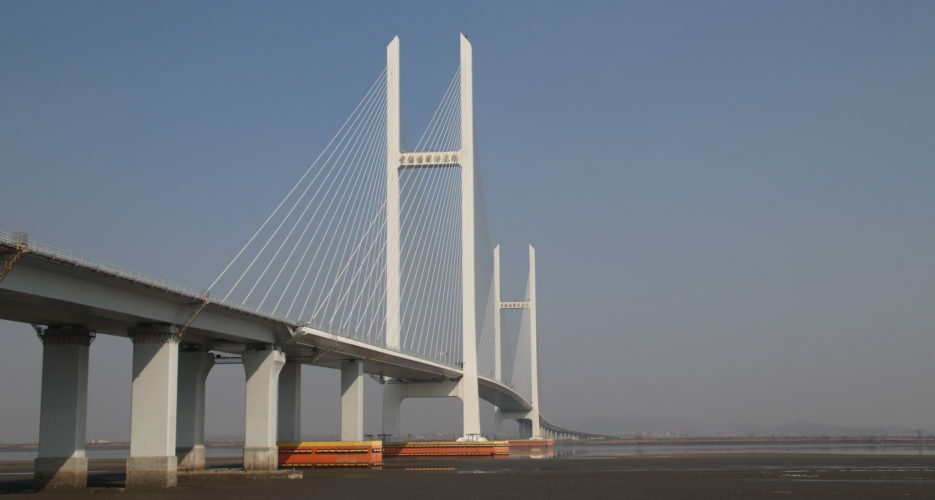
DANDONG, China. A bridge that spent more than a decade as one of Asia’s most conspicuous unfinished projects carried its first official traffic on Thursday. China and North Korea opened the four-lane road crossing on 15 October, ending a 12-year delay. The span, known as the New Yalu River Bridge, gives the two neighbours a second road link across the border river and a new route for goods at a time when Pyongyang’s access to the global economy remains tightly restricted.
China’s state news agency Xinhua reported that Premier Li Qiang addressed the opening ceremony by video and described relations between the two countries as entering a new stage and a new chapter. Hundreds of people gathered on the Chinese side to watch the opening of the 3,026-metre structure. Officials from both countries waved at the trucks as they passed, and South Korean broadcaster SBS reported strict security around the event.
The bridge connects the Dandong New Zone in China’s Liaoning province with Sinuiju in North Korea. Chinese builders finished it in 2014 at a reported cost of about 440 billion South Korean won. Earlier reporting put the Chinese outlay at more than $350 million, and the figure has been widely repeated in coverage of the project. For most of its life the bridge was a monument to stalled ambition. It sat idle because the connecting roads and customs facilities on the North Korean side were never completed. Photographs from the period showed the structure ending in rice fields on the Sinuiju bank.
The reason for that standstill was political. China was North Korea’s principal diplomatic partner and protector for decades, but ties cooled after Beijing backed tighter United Nations sanctions in 2017 following Pyongyang’s nuclear weapons programme. The bridge had originally been conceived as a symbol of a different future. Reuters reported that it was meant to mark a new era in relations and to support Beijing’s efforts to coax Pyongyang toward cautious, export-oriented economic reforms, but the North left its end unfinished after continued nuclear tests. The UN Security Council sanctions regime on North Korea has restricted much of the country’s legitimate trade ever since, and a new bridge does not change those rules. It only changes how much physical capacity exists to move whatever trade is permitted.
Signs that the long wait was ending accumulated through the year. Dandong’s municipal work report for 2026, published in late January, pledged to make every effort to promote the bridge’s opening, stronger language than appeared in an earlier plan from 2019. A large new customs building in Sinuiju, reportedly begun in March, became visible from the Chinese bank and looked close to finished. Satellite images showed lane markings reading “Truck Entry Lane” and “Passenger Vehicle Entry Lane” painted on the Chinese approach in May. By early September, buses were reported making trial runs, and shops and coffee vendors were setting up near the Dandong port. On 9 September, South Korean analytics firm SI Analytics said North Korea was finishing its section of the bridge, which pointed to an imminent opening.
The timing also fits a wider pattern in Pyongyang’s foreign policy. North Korea and Russia opened their first road bridge earlier this month, which Reuters described as a milestone in their deepening strategic partnership. SBS noted that the new Chinese crossing follows the Tumen River road bridge linking Rason with Khasan in Russia. SI Analytics argued that together the two projects mean North Korea now has major new transport links to the Asian mainland on both its western and eastern sides. Joung Eunlee of the Seoul-based Korea Institute for National Unification told Radio Free Asia in July that the Yalu and Tumen bridges look like barometers of Pyongyang’s relations with Beijing and Moscow. That reading is the analyst’s interpretation, but it captures why the openings are being watched so closely.
On the practical side, the bridge should ease a bottleneck. Until now the Sino-Korean Friendship Bridge has effectively served as the only land crossing between the two countries. Experts quoted by Radio Free Asia expected trade volume to more than double once the new bridge is in service, relieving pressure on the older crossing. Joung said the structure should allow direct access for heavy cargo trucks, raise customs capacity and lower transport costs, while supporting development in Sinuiju. The Friendship Bridge is a much older, narrower route, and its limits have long shaped how much cargo can cross at once.
Even so, few observers expect an overnight transformation. SBS reported that the opening does not mean trade will quickly return to the levels seen before the UN sanctions took effect. The mood in Dandong itself has been cautious. Reuters spoke with a local taxi driver who watched the North Korean flag through binoculars last week and said the other side had finally completed its work, yet the city’s economy has struggled since its heyday as the main gateway to North Korea. Government offices relocated to the Dandong New Zone in 2011, but the district remains largely residential with many empty apartments, and a manager at a nearby trade complex said the bridge had little to do with the business there. Reuters also reported that rail services and direct flights between the two capitals had already been restored, yet the increase in trade did little to lift Dandong’s fortunes.
The bridge also leaves several questions unanswered. Neither government has published detailed rules on what cargo and passenger categories will be handled first, and the border has been closed to tourists, which clouds the outlook for the local economy. Whether the customs buildings on the North Korean side can process traffic at the volumes the roadway allows is another open point. Past promises of a Sinuiju economic zone fell short, and traders in Dandong have heard “it opens soon” many times before.
For China, the project has a clear strategic logic. Its northeastern provinces are landlocked, and a smoother route through North Korean territory has long appealed to planners in Beijing. For Pyongyang, the likely draw is access to construction materials and industrial equipment for domestic building projects, an expectation Joung also raised in his comments. Both aims depend on how strictly each side applies sanctions rules and how willing customs officials are to move cargo quickly.
Readers following global infrastructure and the politics behind it can find related coverage at Innovation Times.