
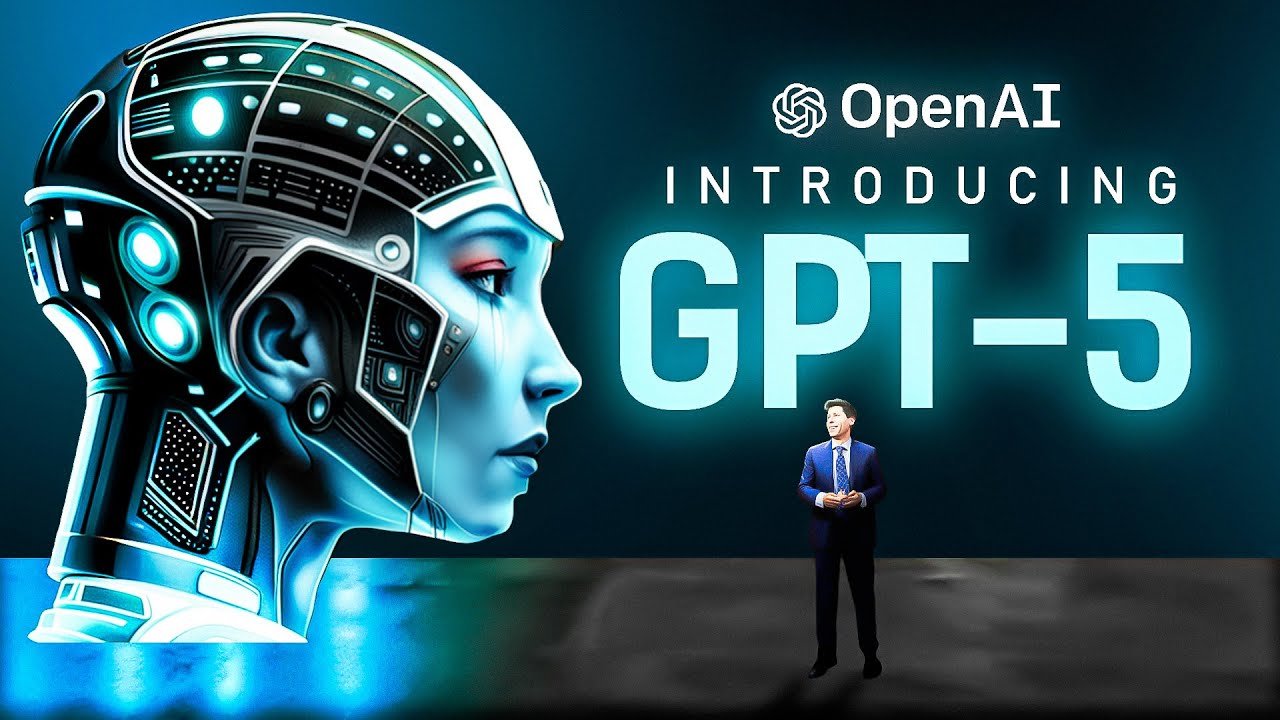
The artificial intelligence industry is moving faster than at any point in its history, and this week the numbers prove it. OpenAI has surpassed $25 billion in annualized revenue while rolling out GPT-5.5 Instant, its most capable and personalized model yet, in a development that signals AI has shifted from an experimental technology into the beating heart of the global digital economy. For governments, enterprises, and everyday users across the world, the implications are vast, immediate, and impossible to ignore.
GPT-5.5 Instant arrived on May 5, 2026, and OpenAI wasted no time showcasing its capabilities. The model delivers significantly faster responses, sharper reasoning, and deeper personalization than its predecessors. Within 48 hours of launch, developers across North America, Europe, and Asia reported integrating the new model into financial services platforms, healthcare diagnostics tools, legal research software, and customer engagement systems. The velocity of adoption underlines a fundamental truth that business leaders must now accept: AI is no longer a competitive advantage for those who adopt it. It is a survival requirement.
OpenAI’s revenue trajectory tells the story with brutal clarity. The company entered 2025 as an impressive startup. It enters mid-2026 as a technology empire approaching a potential public listing, with insiders indicating the company is taking early steps toward an IPO as soon as late 2026. Its closest rival, Anthropic, is not far behind, approaching $19 billion in annualized revenue. Together, these two companies are reshaping the cost structure of virtually every knowledge-intensive industry on earth.
The competitive dynamics within the AI sector are intensifying at the same pace. Google recently released Gemini 3.1 Flash-Lite, an efficiency-focused model priced at just $0.25 per million input tokens, delivering response speeds 2.5 times faster than earlier versions. That pricing strategy is not accidental. Google understands that the next phase of AI adoption will be won in the cost-efficiency race, not just the capability race. Startups and mid-size enterprises that previously could not afford frontier AI are now integrating it at scale, and Google wants to own that market segment.
Meanwhile, governments are catching up to what the private sector already knows. The United States government has reached agreements with Microsoft, xAI, and other major AI companies to provide early access to new models before public release, a landmark regulatory shift. For the first time, powerful AI systems face a pre-deployment review process in the world’s largest economy. Industry observers describe this as a turning point. AI, they note, is no longer operating in a “move fast and break things” environment. The era of consequence-free deployment appears to be ending.
JPMorgan Chase formalized this new reality on the corporate side by reclassifying its AI investments from experimental research and development to core infrastructure. The bank now operates with a 2026 technology budget of approximately $19.8 billion and 2,000 dedicated AI staff. Its AI systems already scan over $10 trillion in daily transactions. JPMorgan projects the technology will generate $2.5 billion in annual value through efficiency gains and revenue growth. When the world’s largest bank treats AI as infrastructure rather than innovation, every other institution in global finance must follow or fall behind.
Read More: US Navy Fires Back in Strait of Hormuz as Iran-US Ceasefire Hangs by a Thread — Global Oil Supply in Crisis
For Africa and emerging markets, the opportunity window is narrowing fast. Countries that invest now in AI education, digital infrastructure, and regulatory frameworks will capture genuine economic benefit. Countries that delay will import AI services built elsewhere, paying foreign companies for tools that shape their own economies. Nigeria’s digital economy is already showing strain from cyber threats growing faster than security capacity, a gap that AI-powered cybersecurity tools can address if investment keeps pace with the threat.
The next 18 months will define which companies, industries, and nations lead the AI economy. GPT-5.5 Instant is not the finish line. It is the starting pistol for the most consequential technology race in human history.