
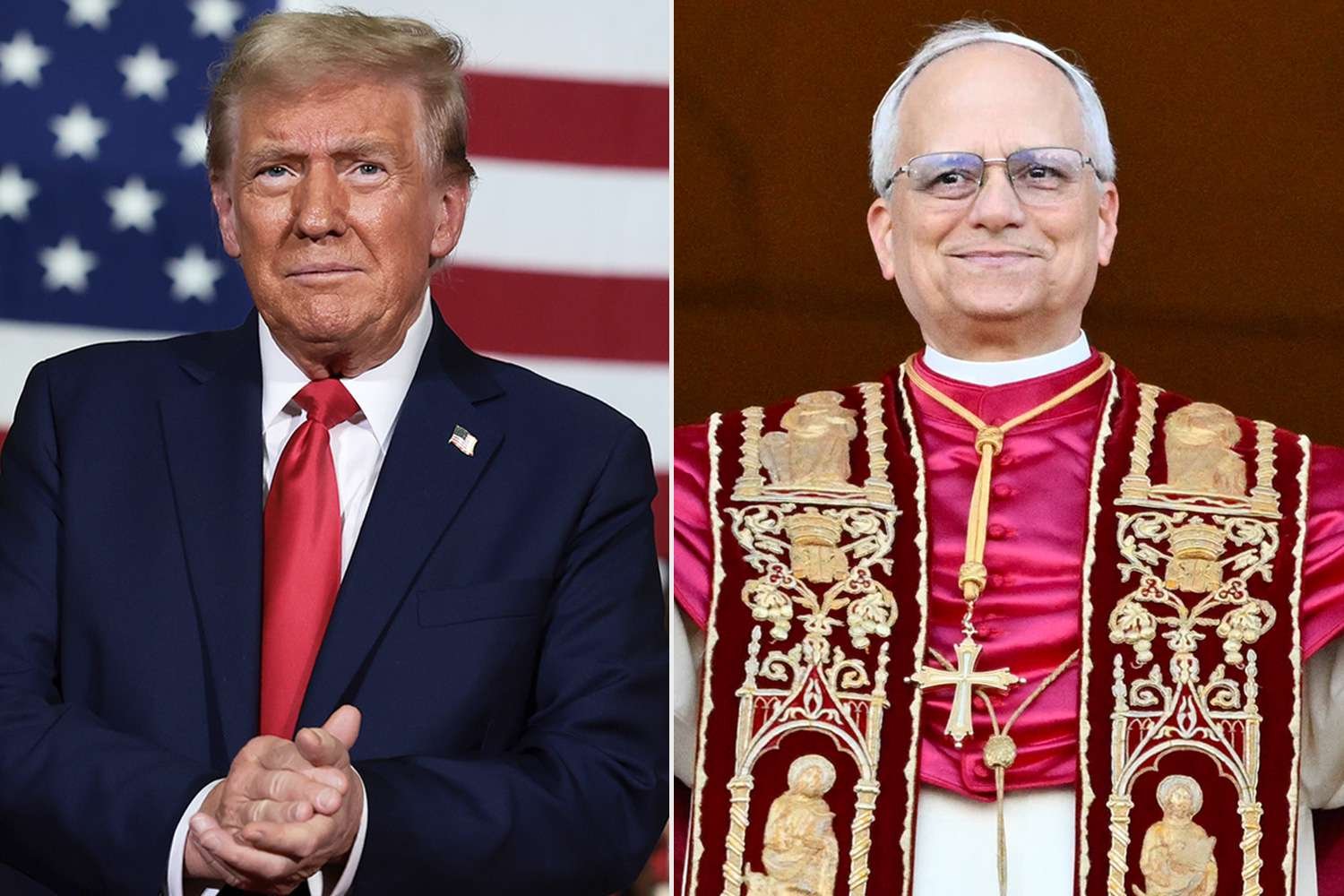
A two-hour-and-forty-five-minute meeting at the Apostolic Palace in Vatican City on Thursday, May 7, 2026, produced polite words but no real thaw in the deepening rift between the Trump administration and Pope Leo XIV — the first American-born pope in the Catholic Church’s 2,000-year history. U.S. Secretary of State Marco Rubio sat across from the pontiff in the pope’s private library, exchanging gifts and pleasantries. The pope gave Rubio a pen carved from olive wood — “olive being the plant of peace,” Leo noted. Rubio gifted the pope a small crystal football bearing the State Department seal, a nod to Leo’s well-known love of baseball.
But the symbolism could not mask the tension underneath. For weeks, President Trump had launched extraordinary public attacks on the pope. Trump called Leo “WEAK on Crime, and terrible for Foreign Policy” in a social media post. He claimed, falsely, that the pope supports allowing Iran to acquire nuclear weapons. On Monday this week, Trump told reporters that Leo “thinks it’s just fine for Iran to have a nuclear weapon” and is “endangering a lot of Catholics.” The remarks were sharply inaccurate. Pope Leo XIV has for months called for a ceasefire in the U.S.-Iran war, criticized nuclear armament globally, and urged ordinary citizens to contact their elected representatives to demand peace through diplomacy.
Rubio, the most prominent Catholic in the Trump cabinet alongside Vice President JD Vance, traveled to Rome partly to contain the diplomatic damage. He denied the trip was a reset mission, telling reporters before departing Washington: “The trip is really not tied to anything other than the fact that it would be normal for us to engage with them.” Vatican Secretary of State Cardinal Pietro Parolin was more direct. “I imagine that everything that has happened in these days will be talked about,” he told reporters the day before the meeting. “We can’t not touch on these topics.”
After the meeting, the Vatican issued a statement describing the talks as “cordial” and said the two sides reaffirmed “the shared commitment to fostering good bilateral relations between the Holy See and the United States.” But the language that followed was pointed. The statement noted that they discussed “the regional and international situation, with particular attention to countries marked by war, political tensions, and difficult humanitarian situations, as well as the need to work tirelessly in support of peace.” The Vatican also said Cuba, Lebanon, Iran, and conflicts in Africa were raised.
Pope Leo has positioned himself as one of the most consequential global voices of moral opposition to the Trump administration’s war in Iran. He has encouraged U.S. bishops to speak out against Trump’s immigration crackdown, issued public calls for migrant dignity, and condemned the use of religious language to justify military action. For Trump, whose political coalition relies heavily on Catholic voters, this creates a serious problem. A Washington Post-ABC News-Ipsos poll released on May 6 showed Trump’s approval among U.S. Catholics fell to 38 percent, a 10-point drop since February 2025. His approval among White Catholics, once a bedrock of his support, collapsed from 63 percent to 49 percent.
Read More: AI-Powered Immigration Surveillance Reshapes U.S. Visa System, Triggering Surge in Denials and Global Talent Flight
The meeting also comes one day before the anniversary of Pope Leo’s election. The Vatican confirmed that no papal visit to the United States is planned for 2026, citing the November midterm elections — a standard Vatican policy of not visiting countries ahead of elections, but widely interpreted as reflecting the depth of the current rupture.
Rubio attempted to reframe Trump’s remarks at a Tuesday briefing. “What the president basically said is that Iran can’t have a nuclear weapon because they would use it against places that have a lot of Catholics and Christians,” he said. The Rev. Antonio Spadaro, undersecretary for the Vatican’s Dicastery for Culture and Education, described Rubio’s visit as an attempt to “cool the rhetoric” and return the confrontation “to a quieter, more institutional register.” Whether that cooling happens before midterms will shape the political landscape across the Catholic world.