
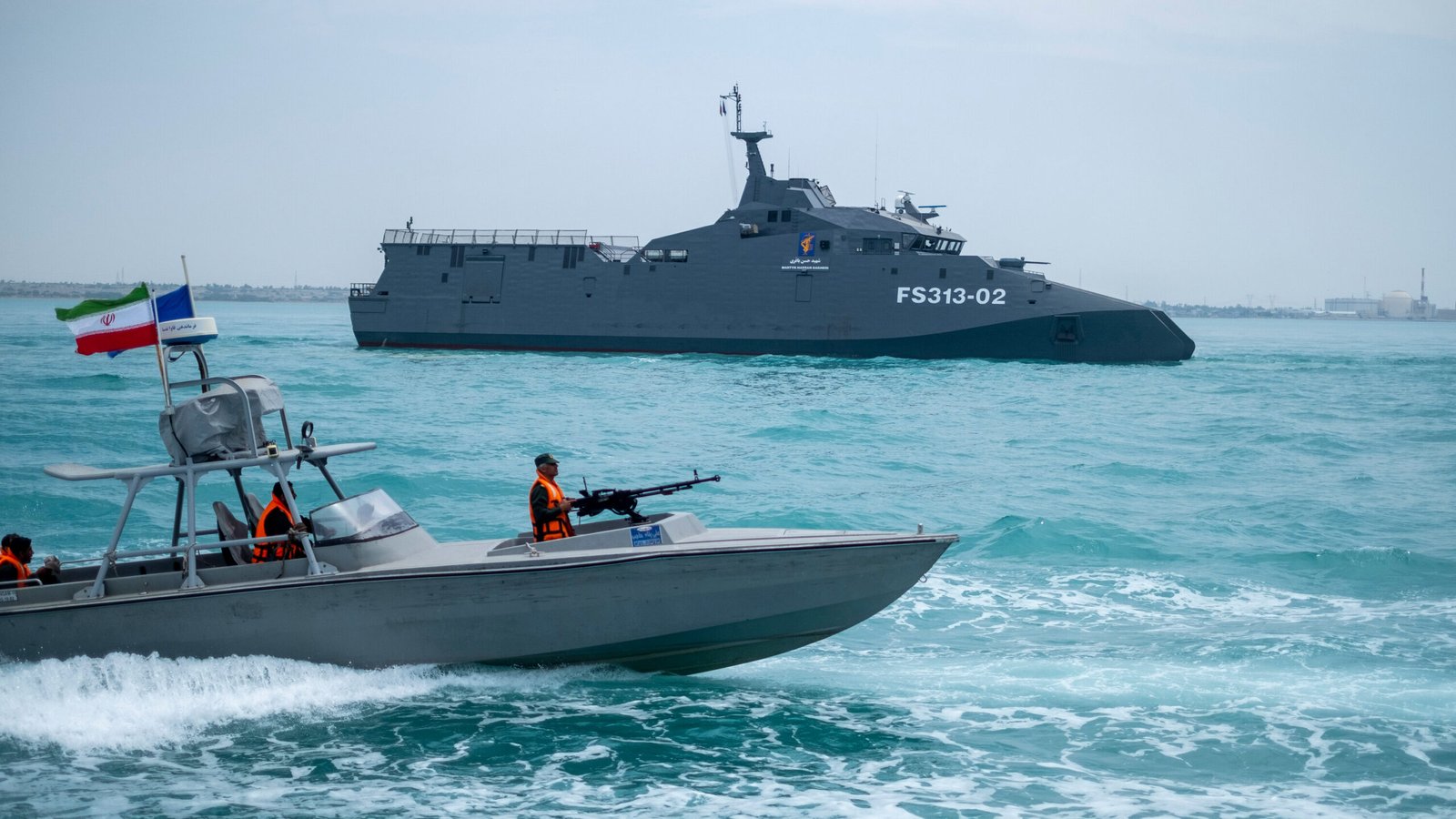
The Strait of Hormuz is once again the most dangerous 21 miles in the world. On May 5, 2026, U.S. Navy guided-missile destroyers operating under President Donald Trump’s “Project Freedom” initiative escorted two American-flagged merchant vessels through the strait — the first successful commercial transit since Iran effectively sealed the waterway on February 28, following the launch of a U.S.-Israeli air campaign that assassinated Iranian Supreme Leader Ali Khamenei.
Danish shipping giant Maersk confirmed that its vessel, the Alliance Fairfax, operated by subsidiary Farrell Lines, completed the passage safely under U.S. military protection. The ship’s crew was unharmed. U.S. Central Command (CENTCOM) described the crossing as proof that Project Freedom is working. But independent military analysts say the celebration is premature.
Retired U.S. Army Lieutenant General Karen Gibson, speaking on CNN, called the first day of Project Freedom a “tactical success” but stressed it must be measured against the pre-war figure of 120 vessels passing through the strait daily. Only two ships crossed. Iran’s Islamic Revolutionary Guard Corps (IRGC) immediately warned that all foreign military forces, especially American troops, approaching or entering the Strait of Hormuz would be targeted. Major General Pilot Ali Abdollahi confirmed the warning on state broadcaster IRIB.
The day after the initial crossing, Iran struck a tanker linked to the United Arab Emirates’ main oil company with two drones as it passed through the strait. The UAE accused Iran directly. No injuries were reported, but the attack underscored how fragile the situation remains. Iranian drones and missiles also hit the Fujairah Oil Industry Zone in the UAE, triggering what Emirati authorities called a “major fire.”
The stakes for the global economy cannot be overstated. Before the war began, roughly 25 percent of the world’s seaborne oil trade and 20 percent of global liquefied natural gas (LNG) passed through the Strait of Hormuz daily. That flow has virtually halted since February 28. Oil prices have surged. Commodity costs have spiked across Asia, Europe, and Africa. Shipping insurance premiums have skyrocketed, making even a partially reopened strait commercially unviable for most operators.
U.S. Defense Secretary Pete Hegseth insisted that Project Freedom is “defensive in nature, focused in scope, temporary in duration — with one mission: protecting innocent commercial shipping from Iranian aggression.” Secretary of State Marco Rubio, who traveled to Rome this week for a Vatican summit, confirmed from Washington on Tuesday that the U.S. Navy had already destroyed seven Iranian fast-attack boats in the waterway. Ten civilian sailors have died since the conflict began, Rubio said.
The ceasefire struck on April 8, which was supposed to reopen the strait, has functionally collapsed. Iran says it views any U.S. interference in the Hormuz corridor as a violation of the truce. Iran’s parliament National Security Commission chief Ebrahim Azizi posted on X that “the Strait of Hormuz and the Persian Gulf would not be managed by Trump’s delusional posts.” Iran also demands U.S. sanctions removal, the end of the U.S. naval blockade of Iranian ports — in place since April 13 — and a full cessation of hostilities including Israel’s operations in Lebanon.
Read More: US-Iran Peace Talks Near Breaking Point as Global Oil Markets Swing Wildly and Gas Prices Hit Four-Year High
Trump told reporters at the White House that Iran’s military had been reduced to firing “peashooters” and that Tehran wants peace, despite public sabre-rattling. “They play games, but let me just tell you, they want to make a deal,” the president said. Iran, however, said it is reviewing Washington’s latest proposal but that shifting U.S. demands make diplomacy difficult. Foreign Ministry spokesperson Esmail Baghaei confirmed that Iran’s proposal does not include discussions on its nuclear program.
The situation remains a ticking clock for global energy markets. Analyst Carl Schuster, a former U.S. Navy captain, told CNN that ship numbers passing through the strait could potentially grow to 20 to 30 per day if U.S. protection holds. But Iran only needs to sustain the perception of risk to keep commercial traffic at a trickle. Friday, May 8, has been set as a deadline for reassessment. The world is watching.