
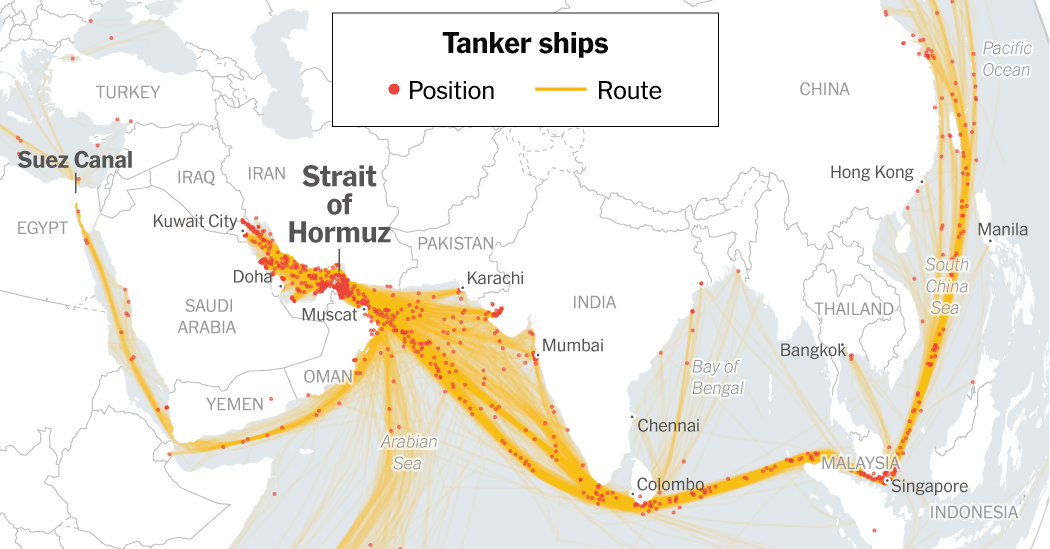
Global oil markets woke up Friday to the starkest energy crisis since the 1970s, with Brent crude futures rising 2.2 percent to $107.38 per barrel and West Texas Intermediate gaining 1.9 percent to $97.71 as the Strait of Hormuz remained blocked and both the United States and Iran seized commercial vessels in the waterway. The developments mark the latest escalation in a conflict that began with joint US-Israeli strikes on Iranian territory on February 28, 2026, and has since fundamentally redrawn the geopolitical map of global energy supply.
The Strait of Hormuz, the narrow passage through which approximately 20 million barrels of crude oil and refined petroleum products pass every day, has become the most contested 34-kilometer stretch of water on Earth. Iran blocked the strait in early March after the initial strikes, a move designed to internationalize the economic cost of the conflict rather than match American and Israeli military firepower directly. The strategy has worked.
Since the war began, oil prices have surged more than 55 percent. Brent crude jumped from around $72 per barrel in late February to nearly $120 at its peak, before partially retreating as ceasefire discussions began. The single largest monthly increase, recorded in March, was one of the biggest one-month oil price surges on record, according to market analysts. Even at current levels, energy economists warn the sustained pressure on prices is inflicting lasting damage on economies that depend on affordable energy to function.
The economic damage reaches far beyond the pump. The European Central Bank has warned that prolonged conflict will likely push Germany and Italy into technical recession by the end of 2026, with ECB officials explicitly citing stagflation risk. Britain’s Shell has issued a separate warning that Europe could face actual fuel shortages as early as this month. Iraq, unable to ship crude through the Strait, has resorted to exporting oil by truck through Syrian territory, with officials reporting that oil revenues dropped more than 70 percent in March compared to February.
For developing nations, the impact is catastrophic. Countries including Nigeria, Pakistan, Bangladesh, Zimbabwe, and Vietnam have reported severe fuel shortages as the disruption to global petroleum distribution compounds pre-existing economic fragility. Nigeria in particular, already battling the economic aftershocks of subsidy removal and naira depreciation, now faces energy costs that threaten industrial output and electricity generation.
In Tehran, the situation is tense. Air defense systems were activated on Thursday night following sounds of explosions, and Israeli defense officials confirmed they are preparing to potentially restart direct military operations after a ceasefire extension expires. US President Donald Trump has warned publicly that if Iran does not negotiate a deal, he will target the remaining 25 percent of Iranian military and energy infrastructure that US and Israeli forces have not yet struck.
Markets also grappled this week with reports of suspicious financial activity around oil futures. A Financial Times investigation found that $580 million in bets on falling oil prices were placed just 15 minutes before Trump’s announcement of a two-week ceasefire pause in March, while a second series of bets worth $950 million was placed before a second policy shift was announced in April. Regulators in Washington have called for investigation, though no official action has been announced.
East Africa is navigating this crisis by accelerating a pipeline project connecting Kenya’s port of Mombasa to Tanzania’s Tanga harbor, aiming to reduce dependence on Middle Eastern refined petroleum. The Mombasa-Tanga pipeline represents one of the first concrete structural responses from any region to the current supply crisis, but analysts note it will take years to come online.
The World Economic Forum summed up the stakes in a recent analysis, warning that what begins as a battlefield shock hardens into a geoeconomic one. The key question facing governments and energy markets is no longer whether the Iran war will have lasting economic consequences, but how deep and how permanent those consequences will be.