
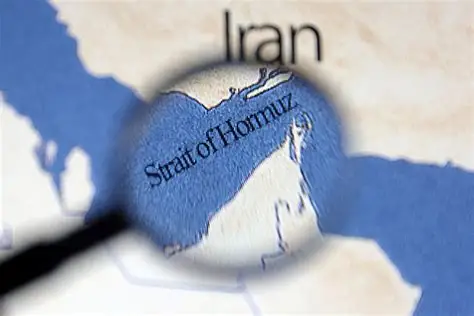
The world energy market stands at a breaking point today, June 1, 2026, as the ongoing conflict involving the United States, Israel, and Iran continues to strangle oil flows through the Strait of Hormuz, the single most important energy chokepoint on the planet.
According to the latest data from the U.S. Energy Information Administration (EIA), Brent crude oil prices hold around $106 per barrel in May and June, driven by catastrophic supply losses that began when the Strait of Hormuz effectively closed after US and Israeli forces struck Iran on February 28, 2026. The waterway, which normally handles roughly 20 percent of the world’s daily seaborne oil trade and 20 percent of global liquefied natural gas (LNG), remains largely impassable.
The scale of this disruption marks the worst energy supply shock in modern history. The International Energy Agency (IEA) confirms that global oil supply dropped by a further 1.8 million barrels per day in April alone, bringing total production losses since February to a staggering 12.8 million barrels per day. Major Gulf producers, including Iraq, Saudi Arabia, Kuwait, the UAE, Qatar, and Bahrain, collectively shut in 10.5 million barrels per day of crude oil production in April, according to the EIA’s May 2026 Short-Term Energy Outlook.
Shipping giants including Maersk, MSC, CMA CGM, and Hapag-Lloyd suspended transits through the strait. Over 150 tankers anchored outside the corridor rather than risk attack by Iranian Revolutionary Guard forces, who laid sea mines and boarded merchant vessels. As of late May 2026, over 1,550 vessels remain stranded and approximately 22,500 mariners are trapped in affected zones.
The Iranian Revolutionary Guard issued formal warnings forbidding passage. The US Navy subsequently blockaded Iranian ports on April 13, 2026, creating what analysts describe as a “dual blockade” that has paralyzed the world’s energy arteries.
The economic consequences ripple far beyond fuel pumps. European airlines face surging ticket prices due to disrupted fuel supplies. Asian manufacturing hubs reliant on Gulf oil scramble for alternative sources. The Philippines declared an energy crisis on March 24, 2026, since it imports 98 percent of its oil from the Middle East. Refinery crude throughputs globally dropped by 4.5 million barrels per day in the second quarter of 2026.
North Sea Dated crude traded in an unprecedented price range of nearly $50 per barrel in April, surging to a high of $144 per barrel before falling below $100 and rebounding again as diplomatic signals oscillated. Markets remain on edge, with forecasters at financial institutions warning of a possible all-time high by September 30, 2026 if the conflict persists.
The EIA projects that if Strait flows resume gradually from June, global oil supply will still average 3.9 million barrels per day lower than pre-war levels for all of 2026. The IEA tapped emergency stockpiles to push oil toward Asia and Oceania, but analysts say the reserve releases only provide temporary relief against a structural supply gap of historic proportions.
Read More: US Defense Secretary Pete Hegseth Warns of China’s Military Buildup at Shangri-La Dialogue as Beijing Skips Summit and Trump Resets Ties with Xi
Diplomatic back-channels between Washington and Tehran remain active, but no breakthrough deal has emerged as of today. Any resolution that allows Strait traffic to normalize could push Brent prices down toward $89 per barrel by the fourth quarter, the EIA estimates, and further toward $79 per barrel in 2027.
For now, the world watches the Persian Gulf with alarm. Energy ministers from G7 nations convene emergency sessions this week to coordinate demand-side responses, while global supply chains brace for an extended period of fuel scarcity and price volatility unlike anything seen since the 1973 Arab oil embargo.