
Innovationtimes.org | Breaking News | May 30, 2026 | Indo-Pacific Security | US-China Relations | Defense
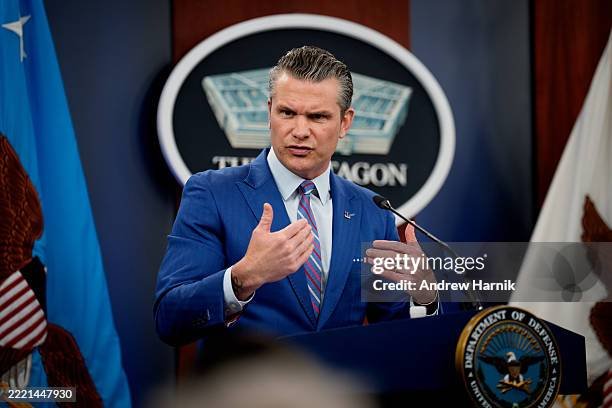
U.S. Defense Secretary Pete Hegseth delivered a pointed warning about China’s military expansion to Asia’s most influential security forum in Singapore on Saturday, telling the Shangri-La Dialogue that America’s allies should feel alarmed by Beijing’s historic military buildup and the expansion of its military activities across the Indo-Pacific. The speech, delivered at the 23rd annual Shangri-La Dialogue run by the International Institute for Strategic Studies, comes at a defining moment in U.S.-China relations and lands with particular force because China’s Defense Minister was notably absent from the summit.
Hegseth told the assembled defense ministers, military chiefs, diplomats, and analysts that the Trump administration seeks a stable peace, fair trade, and respectful relations with China, but made clear that those goals must be pursued through strength. ‘Relations between the United States and China are better than they have been in many years,’ he said, attributing the improvement to Trump’s clear-eyed, strong, quiet, but firm approach toward Beijing. He insisted that the United States seeks to deter conflict, not provoke it, but warned that American military capability remains the foundation of Indo-Pacific stability.
China’s decision to send a lower-level delegation rather than Defense Minister Dong Jun handed Hegseth an effectively uncontested platform to rally allied nations in the region. Bloomberg described the absence as China ceding the stage to the United States. The move mirrors China’s behavior at the 2025 Shangri-La Dialogue, when Beijing also skipped at the ministerial level. Analysts interpret the pattern as Beijing signaling displeasure with the forum’s Western-leaning framework while avoiding an open confrontation that would attract negative headlines.
The summit arrives as the first clear signal of American Indo-Pacific policy direction following the Trump-Xi summit in Beijing earlier this month, when the two leaders agreed to reset ties and work to manage their disputes. That reset, which produced relief in markets and cautious optimism among regional governments, left significant ambiguity about what specifically the United States would and would not accept in terms of Chinese military behavior in the South China Sea, around Taiwan, and across the broader region.
Hegseth’s speech on Saturday began to fill in that ambiguity. He reaffirmed American treaty commitments to Japan, South Korea, Australia, and the Philippines, committed to the AUKUS submarine partnership and the Quad framework, and pushed back firmly against Chinese grey zone tactics, the use of coast guard vessels, maritime militia, and economic coercion to expand Chinese control without triggering a military response. He did not explicitly address Taiwan, but his broader framework of deterrence through strength carries obvious implications for any Chinese action against the island.
The forum comes at a moment when regional security anxieties are running high across multiple dimensions. The Middle East conflict and its disruption of global energy markets have tested the economic resilience of every Indo-Pacific nation. Russia’s intensified war on Ukraine continues to divert European attention and defense resources away from Asia. North Korea’s continued missile testing program adds a third layer of instability. The combination of these overlapping crises is testing the ability of regional security frameworks to manage multiple simultaneous threats.
Vietnamese leader To Lam opened the conference Friday with a keynote address that emphasized ASEAN nations’ commitment to navigating between great powers without being forced to choose sides. That message of strategic autonomy is shared by most Southeast Asian nations and represents a structural challenge for Washington, which would prefer more explicit alignment against Chinese military behavior. Singapore’s own Defense Minister Chan Chun Sing set the tone by warning that the world is in a period when weeks where decades happen, underscoring the speed at which the regional security environment is changing.
The bilateral meetings on the sidelines of the Shangri-La Dialogue are as important as the formal speeches. Hegseth’s schedule included meetings with Australian, Japanese, Philippine, and South Korean counterparts. Japan’s potential sale of Mogami-class frigates to New Zealand was discussed, reflecting the deepening defense industrial integration among American allies that is one of the structural achievements of recent Indo-Pacific security policy.
Read More: Trump Declares Iran War Deal ‘Largely Negotiated’ but Tehran Disputes Terms as 240 Ships Wait to Cross Strait of Hormuz
For allied nations still uncertain about the Trump administration’s reliability as a security partner following Washington’s unpredictable posture in various global crises, Hegseth’s presence and his consistent affirmation of American security commitments provide partial reassurance. The more critical test will be what happens the next time China’s coast guard confronts Philippine vessels in the South China Sea, or the next time Beijing increases pressure on Taiwan through military exercises.
What the Shangri-La Dialogue makes clear today is that the Indo-Pacific remains the central theater of great power competition, and that competition is intensifying across every domain simultaneously. The absence of China’s defense minister did not remove China from the conversation. It simply meant that Beijing’s positions were presented by others, interpreted by analysts, and rebutted by Hegseth without any Chinese voice to contest that framing. The United States won the communications battle at this summit. Winning the strategic competition will take considerably more.